Reform in Action:
Real Stories of the People Transforming Africa
Read the Stories. Feel the Impact.
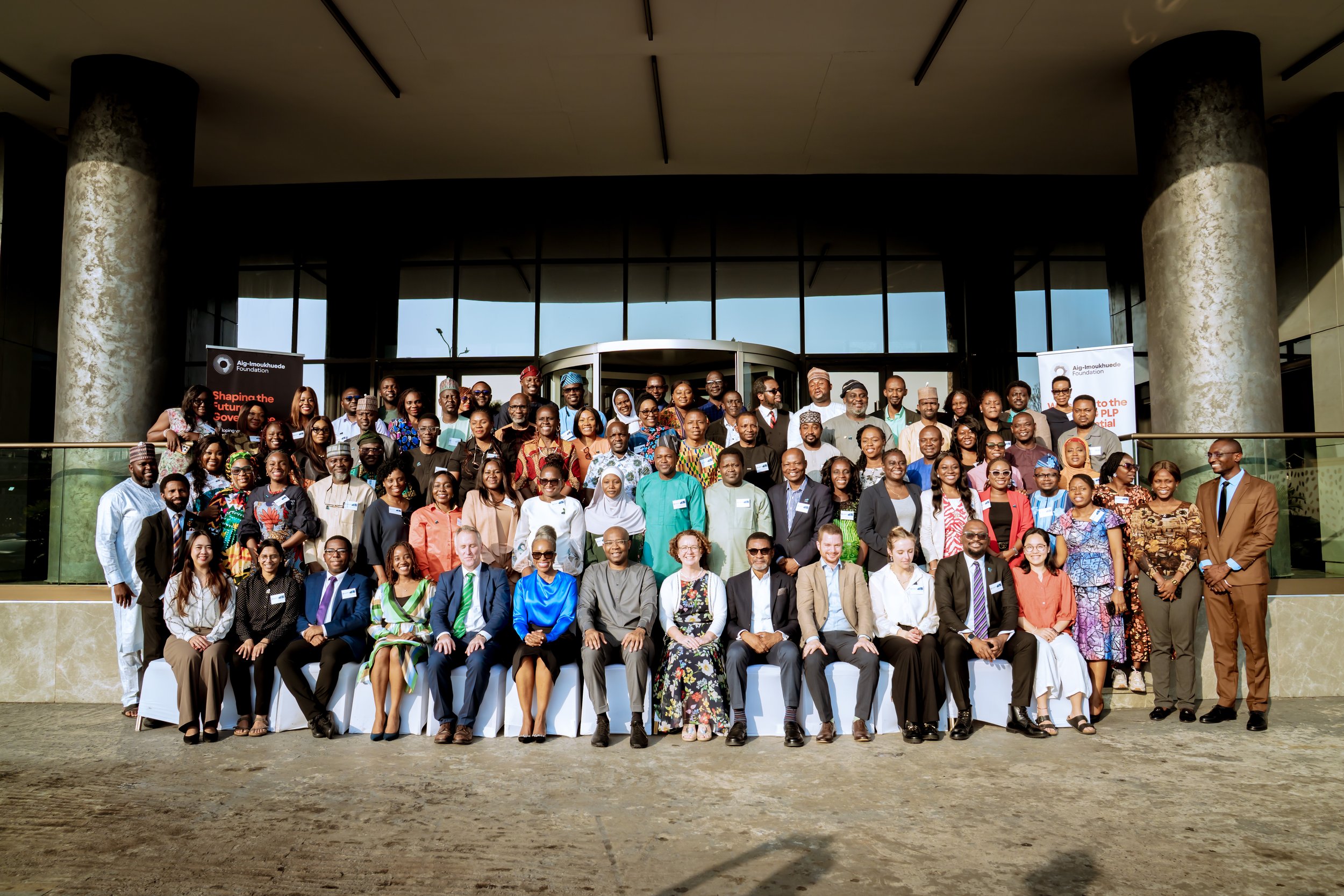
How Our Alumni Are Transforming Public Service Across Africa
From healthcare to education, from policy design to national security, public servants are not waiting for perfect systems. They are building better ones from within.
Each story in these pages represents a real problem that a public servant chose not to walk past. They applied what they learned, worked with the resources available, and created change that others can see and feel.
This is what becomes possible when leadership meets innovation and purpose.

Law, International Relations & Security Services
When Public Servants Work Better, Citizens Feel the Difference
Olusola Odu, Chief Administrative Officer, Nigerian Institute of Science Laboratory Technology
-
Olusola Oluyemisi Odu addressed this from within. She introduced a Core Competency Model that helped staff and supervisors clearly understand their roles, responsibilities, and shared expectations. Teams began to align, decisions became clearer, and collaboration improved across the board.
Beyond the institute, this model offers a practical, low-cost approach that any public institution can adopt to improve performance, without waiting for additional funding.
IMPACT HIGHLIGHTS
Replaced a 96.2% top-down management culture with a formal 4-cluster competency framework — Strategy, People, Performance, and Execution, giving every staff member a clear behavioural standard for their role
Triggered internal restructuring of operational departments, with supervisor-staff conversations on career development and job clarification emerging for the first time
Structured, non-appraisal dialogue between supervisors and staff was introduced as a standing practice Zero-budget model, replicable across any public institution without additional funding.


Health & Social Services
Bringing Healthcare to a Riverine Community Cut Off from the City
Oluwaseun Oladeinde, Director of Planning, Research & Statistics, Lagos State Health District V, Lagos State Ministry of Health
-
Oladeinde Ebenezer took his learning beyond the classroom. He led a reform effort focused on strengthening Igbologun's primary healthcare system through staff training, facility upgrades, improved access to the Basic Healthcare Provision Fund and Lagos State Health Insurance (Ilera Eko) Scheme, and sustained community engagement.
The results were transformative. Outreach sessions increased significantly, immunisation coverage improved, and more residents began accessing care consistently.
IMPACT HIGHLIGHTS
Outreach sessions increased from 4 to 12 monthly
BCG, Pentavalent, and Measles vaccinations for children rose from zero recorded doses to peaks of 180, 123, and 153 doses, respectively, within the project period
Over 540 outpatient visits were recorded at a facility that was previously underutilised by the community
Strengthened trust in healthcare delivery within the community.
Creating a More Coordinated Patient Discharge Process
Oluwabusayo Babatunde, Consultant Paediatrician, Federal Medical Centre, Epe
-
Examples of such gaps, according to the report, include the retention of surgical instruments or medical devices in children, the omission of essential take-home medications, the failure to provide follow-up appointment dates, and the failure to provide clear recovery instructions.
Oluwabusayo Deborah Babatunde introduced a structured discharge checklist alongside nurse-led child patient interviews designed to identify and resolve care gaps before the children left the hospital. Of 52 children discharged in the first month of the project implementation, 43 (83%) now had all their care gaps caught and resolved before leaving, compared to virtually none before the intervention, since there was no structured system at all.
The reform improved coordination, strengthened follow-up care, and achieved strong adoption among healthcare workers with minimal resistance.
IMPACT HIGHLIGHTS
83% of children's discharges from the hospital were captured using the new checklist
In the first month alone, 43 out of 52 children had their discharge gaps identified and resolved in real time before leaving the hospital
Families of 10 discharged children received telephone follow-up calls, through which 2 were found to have missed follow-up appointments that were then immediately scheduled
Nursing staff embraced the checklist immediately and willingly, with none of the resistance that typically comes with change, describing it as a critical safety net.
Education

When Faulty Records Cost Public Servants Their Salaries
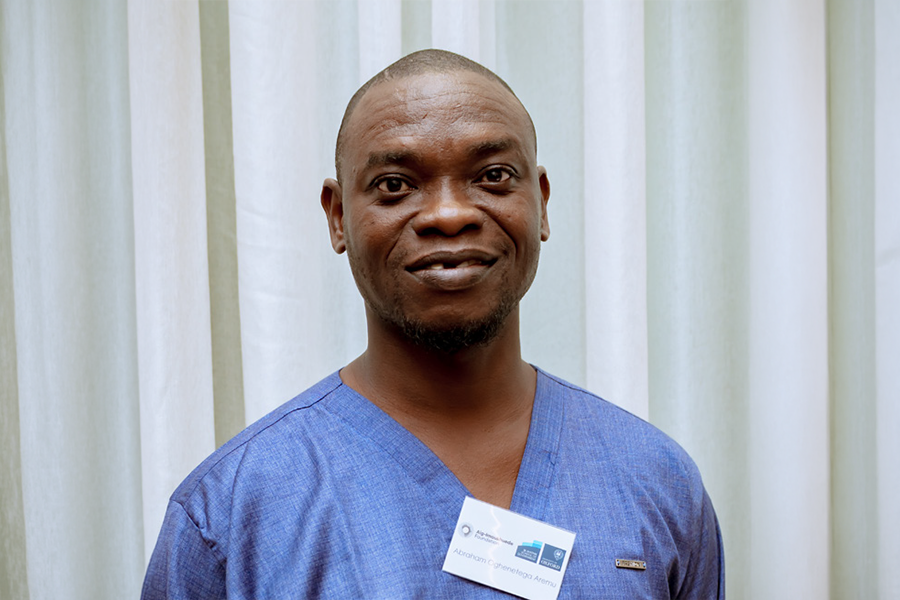
Abraham Aremu, Assistant Education Officer, Ministry of Education, Education, District V
-
Reversing those errors was a slow, frustrating process that left affected staff in financial hardship. Meanwhile, every school and department in the district depended on one EMIS unit to physically supply staff data on demand, creating a permanent bottleneck across all HR decisions, from promotions to redeployments to exits.
Abraham Aremu built a solution using entirely free tools. He created a digital HR portal on Google Sheets and Apps Script that centralised over 3,500 staff records across more than 150 schools into a single master sheet, with each school automatically receiving read-only access to its own data and each staff member able to view their personal dashboard. The system includes an automated exit engine that flags officers due for retirement within the next 12 months, directly eliminating the data errors that had been cutting off salaries prematurely.
The shift was immediate and measurable. What once took days or weeks now takes a few hours, and schools and departments no longer need to contact the EMIS unit to access their own staff information.
IMPACT HIGHLIGHTS
Staff contact with the EMIS unit has been reduced by over 85%; schools now access their own data directly
Processing time for HR requests has been cut from days or weeks to a few hours
Over 3,500 staff records across 150+ schools are centralised and synchronised in real time
Formal request submitted to the Tutor-General/Permanent Secretary for district-wide adoption — with ambition to extend to all Lagos MDAs
Automated exit engine introduced to flag upcoming retirements and prevent erroneous salary stoppages.
Turning 100,000+ Lost Connections into a Pipeline for University Funding
Adeduntan Segun-Olasanmi, Deputy Registrar & Acting Director, Advancement Office, Obafemi Awolowo University
-
Adeduntan Segun-Olasanmi built OAUKonnect, a live digital platform anchored by a unified alumni database compiled from decades of convocation records and institutional sources across all 13 of the university's faculties. The database went from zero to 100,334 alumni entries. The first outreach message sent through the platform achieved a 43% open rate, nearly double the industry benchmark of 15–25% for this type of communication, with alumni responding warmly and expressing interest in supporting the institution.
The project has since been submitted to the Vice-Chancellor for formal launch and scale-up, with plans to extend the model to at least one other public university in the Southwest.
IMPACT HIGHLIGHTS
Database built with 100,334 entries
Achieved a 43% message opening rate
Alumni philanthropic giving is now being tracked through a live Donor Wall on OAUKonnect
Established a more organised alumni management system


Administration, Human Resources & Operations
Replacing Slow Paper Processes with a Digital Workflow System
Akanimo Usoro, Technical Assistant to the Deputy Governor, Corporate Services, Central Bank of Nigeria
-
With no digital audit trail, accountability was difficult to enforce, and governance gaps were hard to close. The Bank had attempted to fix this as far back as 2004, but the initiative stalled repeatedly due to institutional bottlenecks.
Akanimo Usoro revived and delivered what had been attempted for two decades. He led the development and full enterprise-wide deployment of DocFlow, a centralised digital workflow and document management platform built entirely by CBN's in-house developers, with no external vendor cost. The system now covers all 30 departments at CBN headquarters and all 37 branches nationwide.
The results are documented and measurable. What once took 7 days now takes 30 minutes.
IMPACT HIGHLIGHTS
Document approval time cut from 7 days to 30 minutes, across all 30 CBN departments and 37 branches nationwide
Document retrieval time reduced from 48 hours to 5 minutes; 95% of all CBN documents are now fully digital, up from 10%
User satisfaction rose from 45% to 90%; stakeholder complaints about lost or misplaced documents reduced by 95%
SLA compliance improved from 65% to over 90%, with full audit trails now covering 100% of documents.
Creating Protection Systems for Thousands of Young Nigerians
Oludolapo Abraham, Assistant Director, National Youth Service Corps (NYSC)
-
Oludolapo Abraham decided to address it. Working without institutional funding, spending from his own pocket throughout, he secured the Director-General's approval, built a cross-departmental working committee, conducted stakeholder engagement to overcome initial institutional scepticism, and developed a comprehensive policy document complete with an implementation strategy. The NYSC Policy Against Sexual Harassment was approved by the Director-General in June 2024, uploaded on the NYSC portal for public access, and its implementation strategy is already being carried out.
IMPACT HIGHLIGHTS
First-ever NYSC policy against sexual harassment approved, covering approximately 400,000 corps members deployed annually, where no protection framework existed before
The official reporting platform and disciplinary procedures were formally established within NYSC for the first time
Policy went live on the NYSC portal, and the implementation strategy is already underway
Delivered entirely through personal funding by one public servant, with zero institutional budget.

Public Relations & Communications
Positioning Nigeria as a Global Hub for Media Literacy
Ifeanyi Okereke, Assistant Director, Information, Federal Ministry of Information and Culture
-
Ifeanyi Okereke led the stakeholder consultations, intergovernmental negotiations, and policy groundwork that secured UNESCO's formal approval for the International Media and Information Literacy Institute (IMILI) to be designated a UNESCO Category 2 Institute, domiciled at the National Open University of Nigeria in Abuja. On November 7, 2025, delegates at the UNESCO General Conference in Samarkand, Uzbekistan, ratified Nigeria's proposal. IMILI became the first institute of its kind anywhere in the world.
The institute is mandated to serve as a global centre for MIL research, policy development, and capacity building, with a particular focus on Africa, and is positioned to influence the global development agenda on digital resilience and media literacy.
IMPACT HIGHLIGHTS
Nigeria secured the world's first UNESCO Category 2 Institute on Media and Information Literacy, ratified at the UNESCO General Conference in Samarkand, Uzbekistan, November 2025
IMILI was established at the National Open University of Nigeria, Abuja, mandated to serve as a global centre for research, policy, and capacity building on misinformation and digital resilience
Pan-African and global mandate - positioned to influence South-South and North-South cooperation on media literacy and digital education
Presidential launch held April 2026, formally inaugurating Nigeria's role as an international hub for countering misinformation and fake news.




Engineering & ICT
Turning a Delayed Tracking System into a Real-Time Digital Process
Olotu Adanu, Assistant Chief/Environmental Engineer, National Oil Spill Detection and Response Agency (NOSDRA)
-
Yet inside its Service Innovation Department, the agency's own internal operations ran on a manual, paper-based tracking system where supervisors could see less than a third of ongoing tasks, half of all assignments missed their deadlines, and files regularly went missing. Delays, poor accountability, and lack of coordination had become the norm in an agency that exists to ensure none of those things happens when it matters most.
Olotu Adanu built a fix using entirely free tools. He designed and deployed NOSDRA e-Track, a cloud-based workflow system built on Google Sheets, with real-time monitoring, colour-coded status updates, and structured access controls for different staff levels. The system converted a chaotic paper register into a live, centrally accessible dashboard that staff and supervisors now rely on daily. The project was delivered at virtually zero cost to the institution.
IMPACT HIGHLIGHTS
Job processing time reduced from 5 days to 2.7 days, indicating a 45% reduction
Supervisor visibility into ongoing tasks improved from 30% to over 90%
On-time task completion increased from 50% to 85%
Missing or untraceable file cases reduced by over 80%
Staff workflow satisfaction increased from 40% to 88%
Making Regulatory Processes Faster and More Transparent
Abayomi Akinyemi, Information Technology Manager at the National Agency for Food and Drug Administration and Control (NAFDAC)
-
Abayomi Akinyemi built an online portal that replaced the entire physical submission process. Pharmaceutical companies can now submit dossiers electronically in the internationally recognised Common Technical Document format, track their applications in real time, and communicate directly with NAFDAC through an integrated helpdesk system. Every issue is logged and resolved on the platform, creating an auditable trail that has significantly increased applicant trust in the regulatory process.
The portal went live in May 2023 and has since processed close to 600 applications, each one representing a pharmaceutical product that has gone through a more transparent, accountable regulatory review than was previously possible.
IMPACT HIGHLIGHTS
Over 600 dossier applications successfully processed, thereby making well-vetted pharmaceutical products available to Nigerians faster and more transparently than before
Real-time application tracking introduced for the first time, replacing a system where applicants had no visibility once they submitted
Integrated helpdesk established, logging and resolving every applicant issue on the platform
Upgraded version of the portal approved by NAFDAC management for development as a permanent, international-standard regulatory tool.
Strengthening Accountability in Customs Operations
Abbas Abarshi, Superintendent, Nigeria Customs Service
-
At baseline, average processing turnaround in the unit stood at 12 days, an active backlog of 11 files sat unresolved, and supervisors relied on informal follow-ups rather than any structured visibility system. Delay, poor accountability, and lack of coordination had become the norm.
Abbas Abarshi fixed this without spending a single additional naira and without touching any statutory procedure. He introduced structured Standard Operating Procedures, file-movement registers, accountability checklists, and an Excel-based workflow dashboard; tools so simple that adoption required only officer sensitisation and leadership engagement, not procurement or legislation. Within three months, the results were measurable.
IMPACT HIGHLIGHTS
Valuation processing time reduced from 12 days to 7 days; a 42% improvement in three months, at zero additional cost
Active file backlog volume reduced from 11 to 6; a 46% decline, with near-complete traceability now achieved across the unit
Supervisory oversight shifted from reactive, informal follow-ups to structured, real-time performance visibility
Faster, more consistent valuation directly reduces the clearance delays that drive up costs for importers, and ultimately, prices for Nigerian consumers.
Millions of Nigerians Go to Work Every Day. For Years, Nobody Was Checking If It Was Safe to Do So
Adaora Ogbu, Technical Coordinator, Federal Ministry of Labour and Employment
-
Adaora Ogbu changed that. As Technical Coordinator of the 2025 Safe Workplace Intervention Project, she designed the 136-item standardised e-checklist used across all audits, trained and coordinated 164 government auditors drawn from the Federal Ministry of Labour and NSITF across zonal clusters, and managed a nationwide audit operation spanning 23 states and all six geopolitical zones. Out of over 230 nominated organisations, 183 workplaces were audited, generating, for the first time, a credible national dataset on workplace safety performance that can drive policy, regulation, and targeted intervention.
Top-performing organisations were publicly recognised through a transparent, evidence-based awards system. Underperforming organisations received targeted advisory support and corrective guidance. The project established, at the national scale, that workplace safety compliance in Nigeria can be measured, ranked, and acted upon.
IMPACT HIGHLIGHTS
183 workplaces audited across 23 states and all six geopolitical zones — Nigeria's most comprehensive workplace safety audit to date
First-ever standardised 136-item e-checklist deployed, giving Nigeria an objective, national benchmarking tool for workplace safety compliance
164 government auditors trained and coordinated nationwide, directly strengthening Nigeria's public sector inspection capacity
Audit results now powering the Federal Ministry of Labour’s policy and regulatory decisions, backed by verified zero Lost Time Injury records spanning 3–5 years in top-performing organisations.
The Agency Digitising Nigeria's Identity System Hadn't Digitised Its Own Staff Appraisals
Bolaji Onilenla, Principal Identity Officer, National Identity Management Commission (NIMC)
-
For an institution managing one of Nigeria's most critical digital infrastructure assets, the irony was stark: the agency digitising Nigeria's identity system was running its own internal performance management on paper.
Bolaji Onilenla led the development and deployment of a 360-degree digital appraisal platform, built entirely in-house by a three-person team personally inaugurated by the DG/CEO, at zero external cost, that replaced the manual process with a centralised, multi-rater system. Supervisors, peers, and subordinates now all contribute to performance evaluations within a single platform, creating a fairer, more objective, and fully trackable process. The platform went live, is accessible at appraisal.nimc.gov.ng, and has already completed a full appraisal cycle.
IMPACT HIGHLIGHTS
3,436 NIMC staff onboarded onto a 360-degree digital appraisal platform, replacing a paper-based system with no objectivity or audit trail
First-ever multi-rater assessment at NIMC; supervisors, peers, and subordinates now all contribute to a single, transparent evaluation
Built entirely in-house at zero external cost by a DG/CEO-inaugurated team and replicable across any public institution
Live at appraisal.nimc.gov.ng and now in its second year of full institutional use.
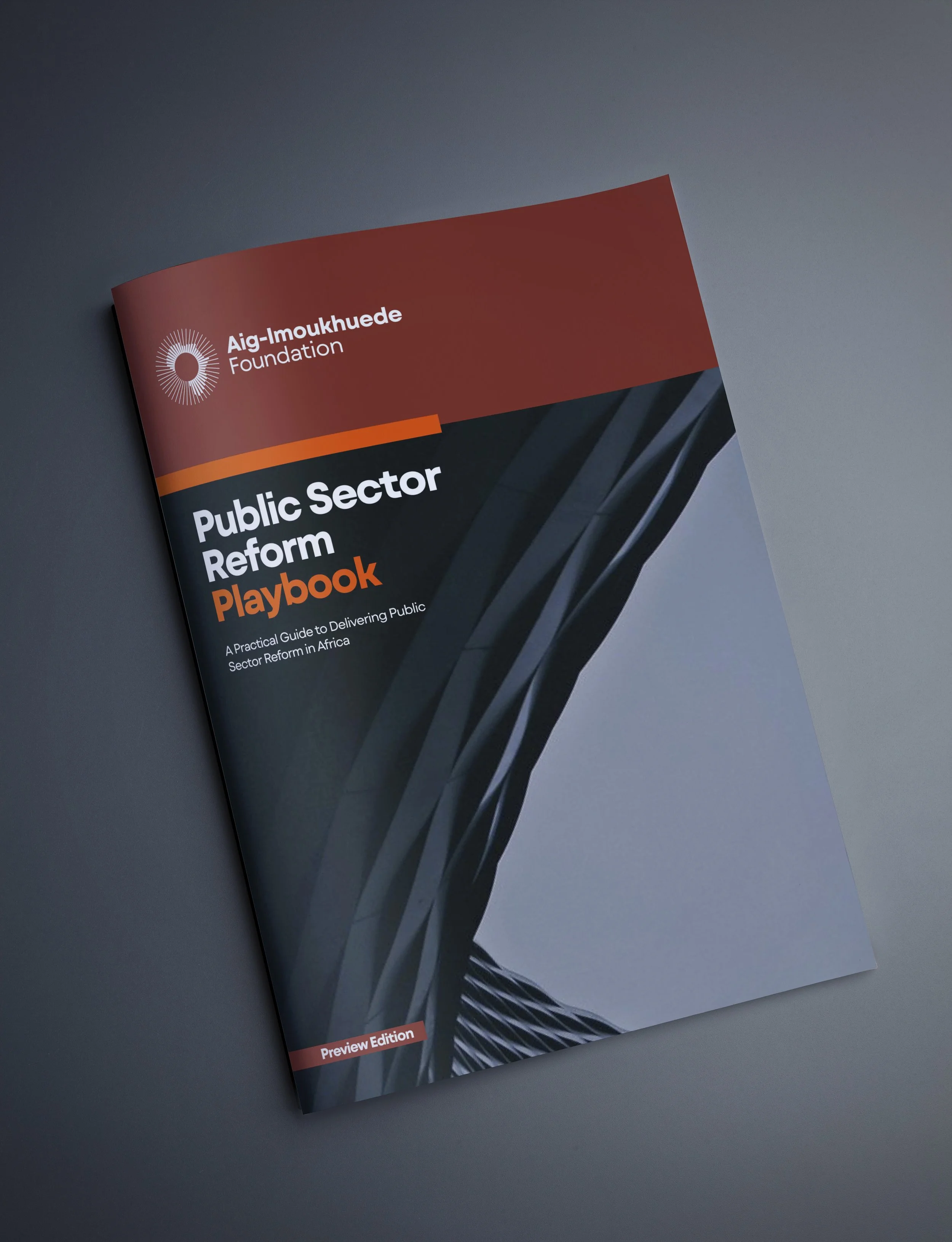
The Aig-Imoukhuede Reform Playbook
Through our work in public sector transformation, we have engaged closely with public sector leaders to understand what drives successful reform and what tends to stand in the way.
Drawing on these insights, and on the lived experiences of our alumni leading reform projects across institutions, we developed the Reform Playbook. This resource distils practical lessons from real reform journeys and offers a structured approach to navigating change within the public sector.
Download the Summary
Scan the QR code or visit the link below to access the Reform Playbook summary.
Or visit the link below to access the Reform Playbook summary.
bit.ly/publicreforms