
Leading Nigeria’s Reforms: A Call for Transformative Leadership, Local Innovation, and Daily Accountability
Author:
Chioma Njoku, Director of Programmes, Aig-Imoukhuede Foundation
Across Nigeria and much of Africa, our institutions, particularly in health and social development, are being tested by relentless shocks: disease outbreaks, climate change, and widening socio-economic inequalities. In the face of these realities, one truth is becoming increasingly clear: the future of public service transformation will not be determined by how much we spend, but by the quality of our leadership, the boldness of our innovation, and the consistency of our accountability.
Transformation is not simply a matter of scale; it is a matter of culture. In this context, culture is shaped by the people who show up every day to solve problems, improve systems, and serve communities more effectively.
Our work at the Aig-Imoukhuede Foundation continues to affirm this perspective. We continually see that meaningful progress begins when reform is not treated as a one-off initiative but as an ongoing mindset. Progress happens when leadership is people-first, when innovation is grounded in local realities, and when accountability becomes a daily habit rather than an annual exercise.
Leadership That Enables Healthcare Reform: Beyond the Status Quo
A future-ready health system does not begin with infrastructure or policies; it is created by individuals who lead with empathy, challenge entrenched assumptions, identify and solve everyday problems, harness existing resources, and build systems that endure. For Nigeria to establish health institutions prepared for the future, we need leadership that prioritises efficiency and genuine impact.
This calls for reimagining leadership within our healthcare system and the broader development sector. Leadership should not be seen as a position of authority, but as an opportunity for agency. Leaders must reflect on the systems they are enabling, the mindsets they are nurturing, and the barriers they are working to remove.
Consider Dr Oladeinde Oluwaseun, the Director of Planning, Research, and Statistics at the Lagos State Primary Healthcare Board (District 5), who understood the challenges of primary healthcare centres and of the communities struggling access quality care. He sought, first, to improve the health-seeking behaviour of the community, creating demand on the one hand, while strengthening healthcare supply on the other. To drive demand, he organised sensitisation programmes for community members and Ward Health Committee members, fostering awareness and trust that led to increased visits to the health centre. In response to the growing demand, he enhanced service delivery by leading training for healthcare professionals, which contributed to improved routine immunisation coverage across the district. This is what it looks like when leaders focus on creating real value for citizens. He also ensured that healthcare centres were enrolled in the government’s existing Basic Healthcare Provision Fund (BHCPF), making more funding available to them while reducing out-of-pocket expenditure for health seekers.

Innovation Rooted in Local Healthcare Realities
Innovation is also often misunderstood as something reserved for technology startups or multinational firms. Yet, some of the most impactful innovations in Nigeria’s development sector are low-tech solutions born out of necessity and limited resources. For instance, Dr Archibong Efioanwan, a Registrar at the University of Calabar Teaching Hospital, conceptualised a Digital Patient Calling System at the hospital’s General Outpatient Clinic. The system aims to reduce consultation disruptions and address delays caused by patients missing their turn due to inaudible announcements. Without relying on complex software, this thoughtful redesign of patient flow would ease the burden on both staff and patients, resulting in noticeable improvements in clinic efficiency.
In this case, innovation is not about introducing something novel but about viewing existing problems through a different lens and taking ownership of them. This is the kind of local, thoughtful, and scalable innovation that Nigeria’s healthcare system needs.
Accountability as the Lifeblood of Public Health Institutions
Without accountability, even the best reforms can falter. But accountability is more than audits or donor reports; it’s consistency, transparency, and trust. It’s reflected in how decisions are made, how resources are allocated, and how the public is kept informed. In Nigeria, accountability must go beyond compliance; it must become a lived value in every health facility, agency, and ministry.
In this light, in 2023, Dr Mazeedat Erinosho from the Lagos State Ministry of Health deployed an online patient appointment system to manage appointment booking, in-app messaging, and emergency triggers, ratings, and reviews. The objective was to reduce patient wait time by 50% and improve the quality of care received by patients. The ratings and review features were designed to ensure that feedback could be received, and physicians were held accountable, receiving real-time feedback that would enable them to improve service delivery continually.
Also, in a hospital in Lagos, non-compliance with clinical guidelines on antimicrobial prescriptions meant that although the hospital had an Antimicrobial Stewardship System, it did not automatically lead to a significant reduction in the pattern of antimicrobial prescriptions from doctors. This was contributing to a growing antimicrobial resistance. Accountability meant that periodic tracking of antimicrobial prescriptions had to be done to promote prescription appropriateness. This was the task taken up by Dr Aderonke Oluwo, which reduced inappropriate prescription by 50% in just 6 months.
Dr Olowu, as the head of the Anti-Microbial Stewardship team, held weekly meetings to identify and resolve constraints to policy adoption while tracking compliance, training doctors on the value of the system and reporting data to the hospital’s management weekly.
Accountability in healthcare means making decisions visible, tracking outcomes, inviting community feedback, and ensuring that every naira spent delivers real value to patients. When systems are transparent, public trust grows, and so does the resilience of those systems.
Future-Readiness: A Mindset, Not a Milestone
There is no final destination in healthcare reform. Future-readiness is not a status to be achieved, but a mindset to be maintained. It is the ability to adapt, to learn, to anticipate, and to respond in the face of evolving public health challenges.
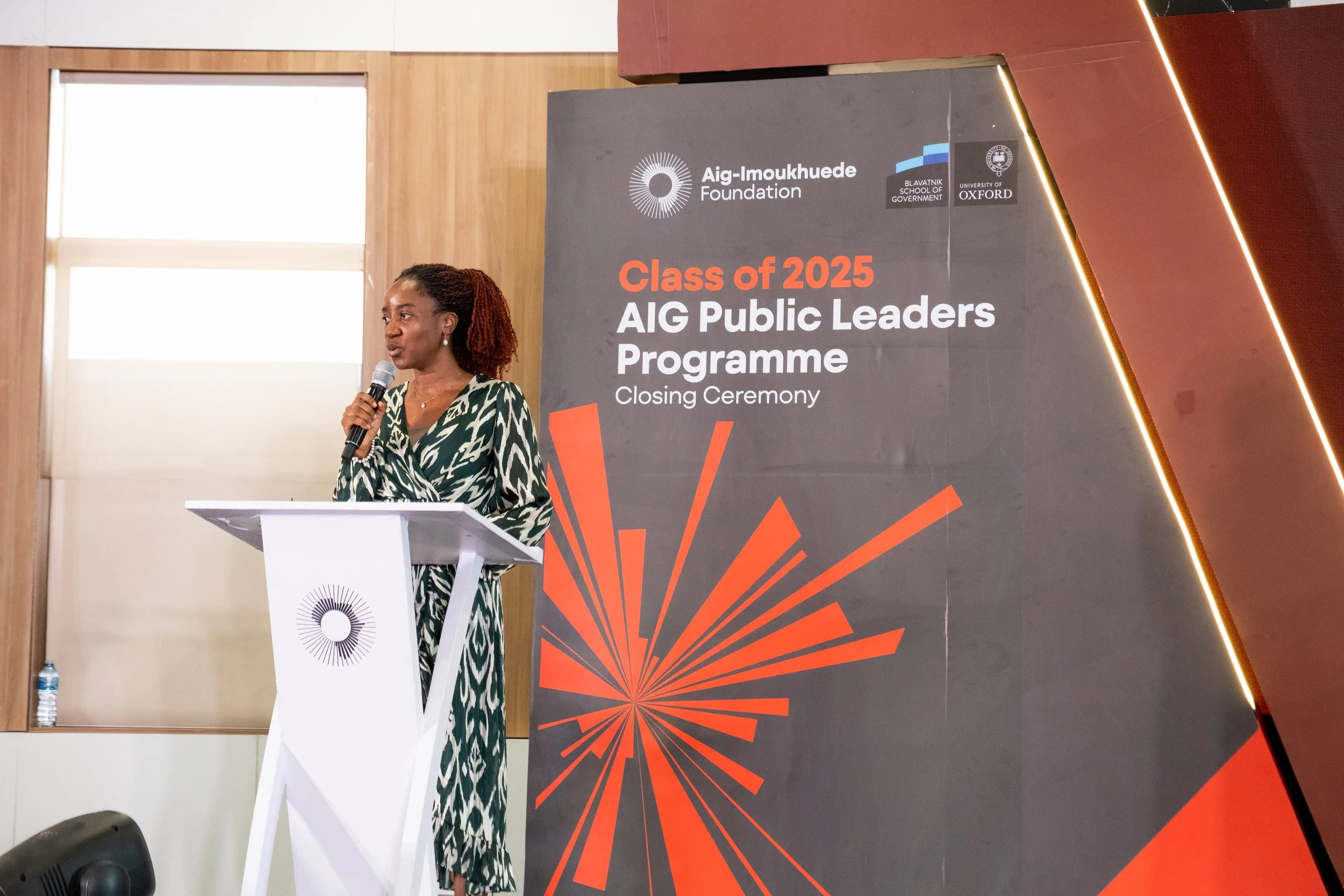
The stories of Aderonke, Archibong, Mazeedat, and Oladeinde are not outliers. They are alumni of the AIG Public Leaders Programme, the Foundation’s executive education programme focused on supporting public sector leaders who acquire the skills and knowledge they need to drive reforms in their organisations. As part of their leadership journey, each participant is required to design and implement a reform project within their organisation, applying learned tools, frameworks, and leadership strategies to solve real-world problems.
These leaders are proof of what is possible when public servants are equipped with the mindset, tools, and support systems needed to drive credible, citizen-focused reform. Their impact is a direct result of investing in people, not just policies or infrastructure, but in the capacity to lead change from within.
At the Foundation, our experiences continue to reinforce this truth: investing in systems alone is not enough. Sustainable reform begins with capable, ethical, and empowered individuals.
To build healthcare systems that truly serve the people, we must look beyond infrastructure and policy. Real transformation begins with nurturing people-first leadership, enabling citizen-centred innovations, and fostering a culture where accountability is non-negotiable. While this work is already underway, scaling it will demand cross-sector collaboration, sustained investment, and a shared commitment to transforming health systems from the inside out. Transformation begins with a mindset, is sustained by culture, and is driven by people. The opportunity is here, and so is the responsibility.