

Articles
Articles published by the Foundation

Why Communities Must Be Co-Creators, Not Beneficiaries, of Public Sector Reform
Why Communities Must Be Co-Creators, Not Beneficiaries, of Public Sector Reform
If there is one lesson Africa's governance journey has taught us, it is that development cannot be delivered to people as though it were a parcel. It must be built with them. Public sector reform succeeds not because governments possess all the answers, but because they are willing to ask the right questions.

The Biggest Risk to Institutions Isn’t Bad Leadership, It’s Leadership That Fails to Develop Others
The Biggest Risk to Institutions Isn’t Bad Leadership, It’s Leadership That Fails to Develop Others
An institution’s real strength is never its best leader. It is what remains standing when that leader is no longer in the room. Strong institutions are not built around individuals. They are built around systems, values, knowledge and people who are equipped to carry the work forward.
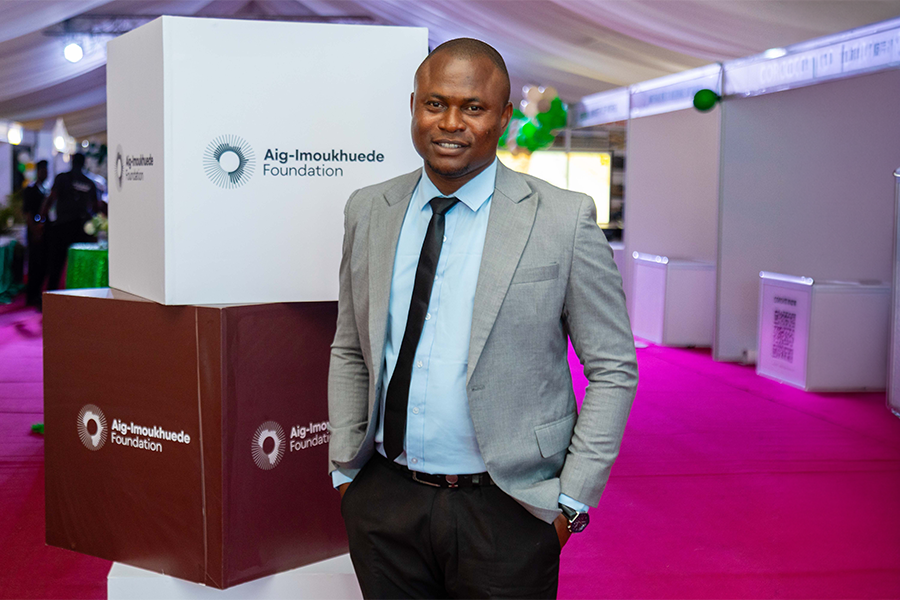
Why Leadership Is a Team Sport
Why Leadership Is a Team Sport
The most effective leaders I have encountered are distinguished less by their ability to solve every problem themselves and more by their ability to create environments where others are empowered to contribute. They build trust, encourage constructive disagreement, recognise expertise wherever it exists, and create psychological safety for people to speak openly.

A Theory of Change for Africa: Why We Build Systems, Not Monuments
A Theory of Change for Africa: Why We Build Systems, Not Monuments
Lasting change comes from addressing the systems that produce outcomes, not merely the symptoms they create, even when systems are harder to influence, slower to reform, and less attractive to fund. That approach demands patience.
Aigboje Aig-Imoukhuede, CFR and Ofovwe Aig-Imoukhuede, Co-Chairs, King's Trust International Africa Advisory Board

Making Public Sector Reform Possible
Making Public Sector Reform Possible
When leaders from different sectors and countries share experiences, a common pattern often emerges. Challenges that appear unique to one institution frequently mirror those faced elsewhere: aligning stakeholders around reform priorities, navigating complex organisational environments, and sustaining momentum for change over time.

Nigeria's Public Institutions Need Young Talent.
Nigeria's Public Institutions Need Young Talent
If we want stronger public institutions in ten years, we need young people today who still believe those institutions are worth their talent. That means more than encouraging people to serve; it means showing them, with evidence and with stories, that public service is a place where committed people make real differences.

Data to Decisions: Strengthening Data-Driven Policymaking in Nigeria’s Civil Service
Data to Decisions: Strengthening Data-Driven Policymaking in Nigeria’s Civil Service
Effective governance is fundamentally driven by sound, evidence-based public policies. In today’s complex environment, the quality of government decisions increasingly depends on the systematic use of reliable research, robust data analysis, and rigorous monitoring and evaluation. These elements enable policymakers to understand societal needs, design targeted interventions, track progress, and make timely adjustments that deliver meaningful results for citizens.

FP Analytics Report Examines Role of Diaspora Philanthropy in Nigeria
FP Analytics Report Examines Role of Diaspora Philanthropy in Nigeria
What is the role of philanthropy in supporting Nigeria’s sustainable development goals (SDGs)?
FP Analytics, the independent research arm of Foreign Policy, explores this in its new research report, Driving Sustainable Development in Nigeria Through Diaspora Philanthropy, published with the support of the Ford Foundation. The reportanalyses how high-earning Nigerians in diaspora engage in philanthropy, investment, and other forms of giving to their country of origin and how that investment has the potential to make an even greater impact.

Cultivating transformative public leadership for African governance
Cultivating transformative public leadership for African governance
By Eniola Olowu, Deputy Director of Programmes, Aig-Imoukhuede Foundation
Across Africa, the demand for stronger governance continues to grow. Citizens increasingly expect efficient services, transparent institutions, and accountable leadership. Yet public institutions often operate under significant social, economic, and political pressures that limit performance and reform capacity.

Keynote Address delivered by Mr Aigboje Aig-Imoukhuede, CFR During the International Civil Service Conference 2026
Keynote Address delivered by Mr Aigboje Aig-Imoukhuede, CFR During the International Civil Service Conference 2026

Policy Development in the Nigerian Civil Service: Learning to Leading
Policy Development in the Nigerian Civil Service: Learning to Leading
Introduction
Effective governance is fundamentally driven by sound public policies. However, contrary to the widely held view that Nigeria’s policy challenges stem primarily from poor implementation, recent evidence, including findings from a baseline survey conducted by the Aig-Imoukhuede Foundation, reveals that faulty policy formulation is a critical and often overlooked contributor to governance failures.

Public Procurement: Beyond Buying and Selling- A Call for Citizen Engagement
Public Procurement: Beyond Buying and Selling- A Call for Citizen Engagement
By Femi Gegele
Ever wondered why a newly built road develops potholes within months, or why hospital renovations stall even after funds are approved? These are not random occurrences. They are the visible cracks of a broken procurement system, one that determines how public resources are planned, spent, and accounted for.
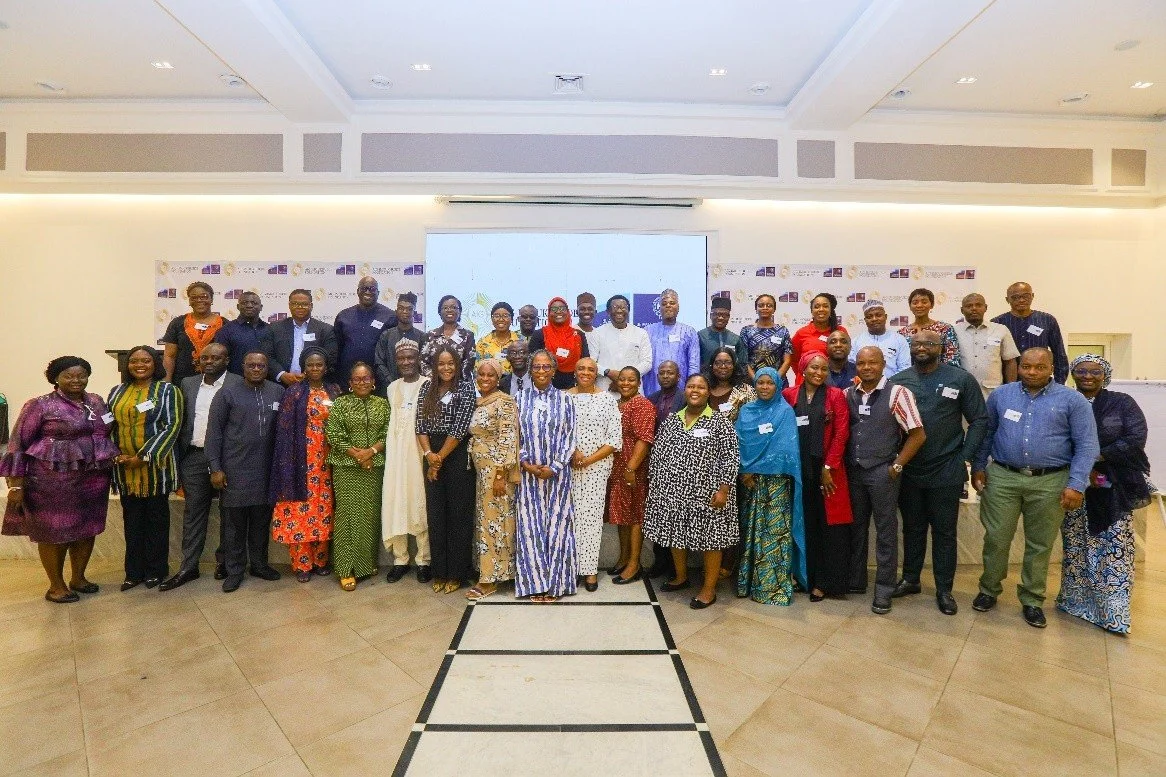
When Change Begins With One Idea: The Power of Capstone Projects in Public-Service Reform
When Change Begins With One Idea: The Power of Capstone Projects in Public-Service Reform
At the dusty reception desk of a busy primary healthcare centre in Lagos, a patient whom we will call Mrs Amina once waited for 82 minutes to see a clinician. Her fatigue was obvious, and her hope for help dimmed by the minute.
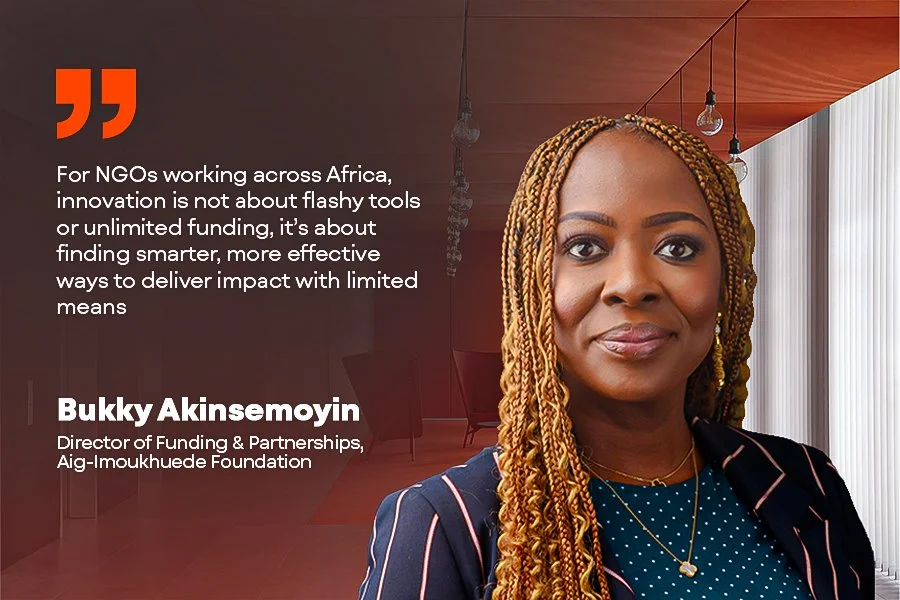
Innovation Isn’t Just for Big Budgets: How NGOs Can Cultivate Creative Problem-Solving
Innovation Isn’t Just for Big Budgets: How NGOs Can Cultivate Creative Problem-Solving
By Bukky Akinsemoyin, Director of Funding & Partnerships, Aig-Imoukhuede Foundation
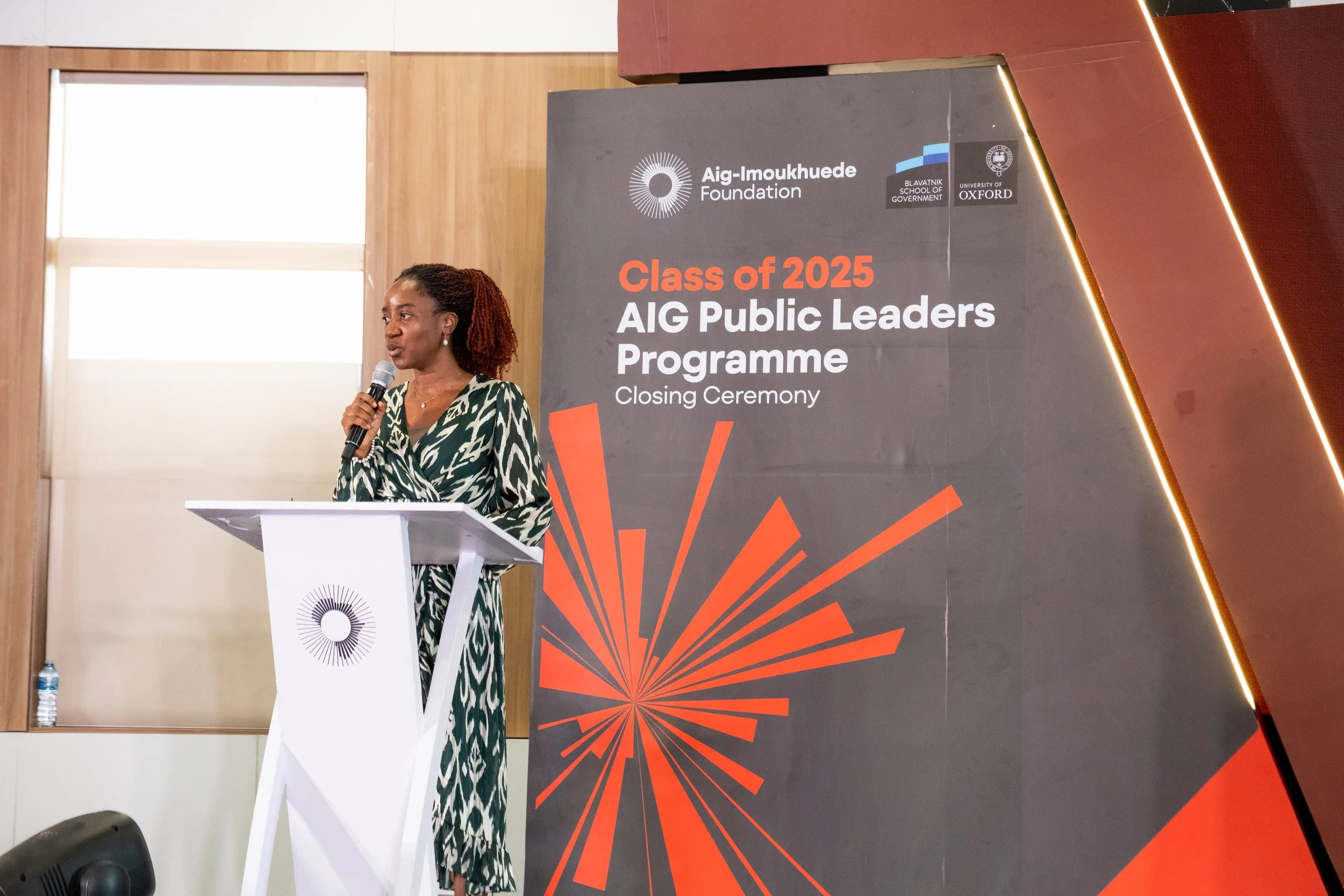
Leading Nigeria’s Reforms: A Call for Transformative Leadership, Local Innovation, and Daily Accountability
Leading Nigeria’s Reforms: A Call for Transformative Leadership, Local Innovation, and Daily Accountability
By Chioma Njoku, Director of Programmes, Aig-Imoukhuede Foundation
Across Nigeria and much of Africa, our institutions, particularly in health and social development, are being tested by relentless shocks: disease outbreaks, climate change, and widening socio-economic inequalities.
The Cost of Reform
The Cost of Reform
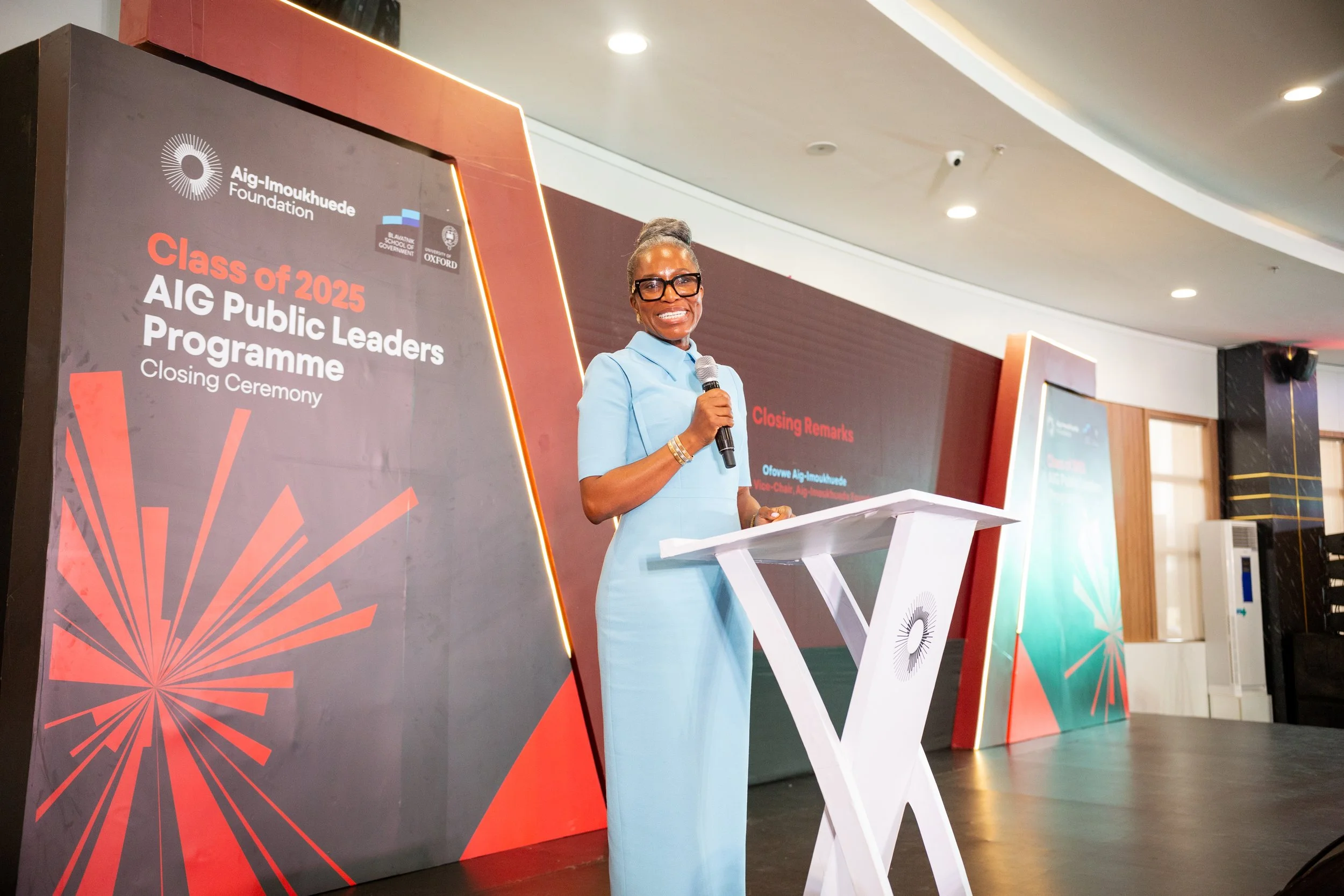
Graduation moments are often framed as endings, milestones that mark achievement and signal readiness for what comes next. But within the context of public sector reform, they are better understood as beginnings. They mark the point at which theory meets institutional reality, and where the true test of leadership begins.

Advancing Africa’s Capital Markets: From Fragmentation to Scale
Advancing Africa’s Capital Markets: From Fragmentation to Scale
Lagos to Cambridge and Cape Town

Policy Brief on New Staff Induction by Line Managers
Policy Brief on New Staff Induction by Line Managers
Introduction
Academic studies show the importance of socialising new recruits into organisational culture while showing the influence of both formal and informal organisational factors in this process. It shows that inculcating recruits into mission driven or performance-based cultural norms and values is critical for organisational performance both in developed and developing countries.

Empowering Community Health Workers: The Backbone of Primary Healthcare Transformation in Nigeria
Empowering Community Health Workers: The Backbone of Primary Healthcare Transformation in Nigeria
The foundation of any robust and just health system, particularly in low- and middle-income nations like Nigeria, is an effective primary healthcare system. In the backdrop of persistent challenges in access and outcomes in healthcare, the PHC frontlines are sustained by a passionate and potent force: Community Health Workers (CHWs). Community Health Workers (CHWs) serve as a critical bridge between underserved communities and the formal health system, offering a cost-effective approach to expanding access to care.

Atoruru PHC's Rebirth: A Tale of Resilience and Recovery Amid Global Health Challenges
Atoruru PHC's Rebirth: A Tale of Resilience and Recovery Amid Global Health Challenges
In its early years, the Atoruru Primary Health Care Centre (PHC) stood as the community's resilient but struggling heartbeat, a place where new life entered the world, yet where many mothers and children faced preventable health challenges. Though dedicated health workers poured their hearts into service, the centre's crumbling g infrastructure and scarce medicines meant care often fell short of what the community deserved.