
Africa Day: Reflections on Public Sector Reform
Every year on May 25th, Africa Day marks the founding of the Organisation of African Unity in 1963, a moment when African nations chose solidarity, self-determination, and the belief that the continent could shape its own future. More than six decades later, that belief remains a work in progress. The question is no longer whether Africa can govern itself, but whether its institutions can be more accountable, deliver the results, and build the relationships that its people deserve.
This Africa Day, members of our alumni community, from Tanzania and Nigeria, share what that work looks like from the inside. Through their reform projects on the AIG Public Leaders Programme, they have each taken on a specific, stubborn challenge in their organisations. Their stories point to something larger: that a transformed Africa is built not through grand declarations, but through the quiet, determined work of public servants who refuse to accept the gap between what their institutions promise and what they actually deliver.
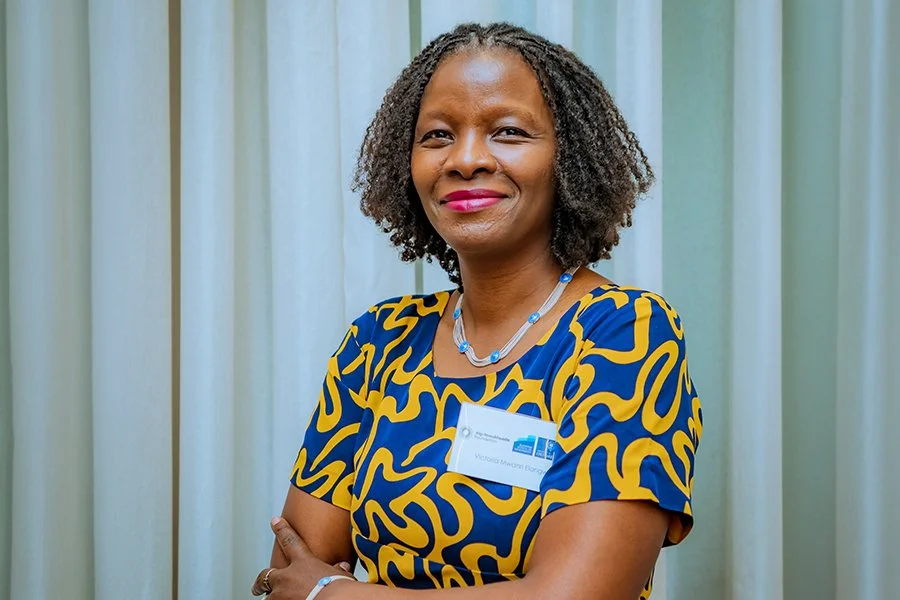
The System Was Not Broken. We Just Didn't Believe in It. - Elangwa Victoria, Tanzania Director of Corporate Services, Tanzania Fertilizer Regulatory Authority
Performance management systems are only as effective as the people operating them. Across Africa's public sector, the problem is rarely that the frameworks do not exist; it is that they only exist on paper.
Tanzania is no exception, but it is on the road to change, with deliberate efforts from the President’s Office and the Public Service and Good Governance Ministry (POPSGG), which oversees the policy framework for performance delivery and execution. At the Tanzania Fertiliser Regulatory Authority (TFRA), we had a functioning performance management system. The structure was there. The reporting tools were there, including a seamless system. Yet year after year, the Authority fell short of its performance targets. The system was not broken; what was missing was the commitment to make it deliver.
Through my AIG Public Leaders Programme reform project, I set out to close that gap. I introduced weekly performance feedback sessions, which we called "PEPMIS Thursday,” a dedicated space for open, honest conversations about targets, progress, and accountability. I made sure every employee understood what was expected of them and, crucially, why it mattered. Small wins were recognised consistently and publicly. Peer support became embedded in the process. By February 2026, we had recorded significant improvements, without introducing or amending a single new policy.
The lesson is straightforward. Performance does not improve simply because better systems are introduced. Systems alone do not drive change; people do. And when people understand the system, see their role in it, and feel genuinely supported, even old systems can begin to deliver very different results.
Following the reform, the President’s Office, Public Service and Good Governance (POPSGG ) finally approved our recommendation to incorporate directors’ comments on submitted performance appraisals from managers. This is a huge win not only for TFRA, but also for the entire public service in Tanzania, as it brought a shift in how we handle performance management. Directors are now actively involved in performance management discussions at every level. This shift was achieved without changing a single policy or regulation. It was achieved by changing how people engaged with the system they already had.
This is not a story unique to Tanzania. It is a story playing out in public institutions across the continent, wherever leaders choose to invest in their people rather than wait for the perfect policy conditions.
We Stopped Waiting for Better Conditions. We Created Better Culture _Adeduntan Segun-Olasanmi, Deputy Registrar & Acting Director, Advancement Office, Obafemi Awolowo University— Nigeria

One of the most inexpensive, yet powerful ways to improve organisational effectiveness is to foster a culture where people are valued for who they are, and celebrated for what they do to contribute to institutional advancement. In many African settings, it is believed that once you are paid for your work, that should suffice in terms of boosting morale. However, this leads to a transactional rather than a relational approach to work, and the difference between the two is felt deeply across our institutions.
In Nigeria's public sector, the crippling effects of inflation, currency devaluation, and a sharply rising cost of living have placed enormous pressure on the workforce. People struggle to stay motivated and find it increasingly difficult to embrace innovation. The prolonged effect is a disconnected and lethargic approach to work.
Through lessons from my participation in the AIG Public Leaders Programme, particularly the module on Strengthening Public Organisations, I introduced a Staff Appreciation Day at the Advancement Office of Obafemi Awolowo University. The initiative is simple by design. It sets aside dedicated time for colleagues to receive public recognition for their contributions to organisational objectives. The day is also devoted to having fun, and playing games that promote team learning and critical thinking skills, creating an environment where people can connect beyond the pressures of daily work.
Each edition lasts just three hours. Yet over the last 13 months, the impact has been anything but small. Teamwork has improved. Productivity has risen. And although the economic challenges linger, staff are willing to make sacrifices because they feel valued, heard, understood, and recognised.
This new culture is already creating positive ripple effects across our institution and has huge potential to transform public institutions within and beyond Nigeria. As Africa marks another Africa Day, the reminder is timely: modern leadership on our continent demands that we strengthen the teams we lead by entrenching a culture of appreciation. When we do, we build institutions that can withstand even the harshest conditions, not because the conditions improved, but because the people within them felt seen.
Conclusion
Reform is not always grand. It is sometimes in the daily choices of public servants who decide to make systems work, to value people, and to lead differently.
As we mark Africa Day, the real measure of progress is not just in policies adopted or declarations made, but in whether our institutions are becoming more responsive, more accountable, and more human. Ultimately, the future of Africa envisioned in 1963 will not be delivered by systems alone, but by people who choose, every day, to make those systems work.