
Dr Abubakar Kaka Sanda
Driving sustainable institutional change through innovative approaches at the University of Maiduguri Teaching Hospital
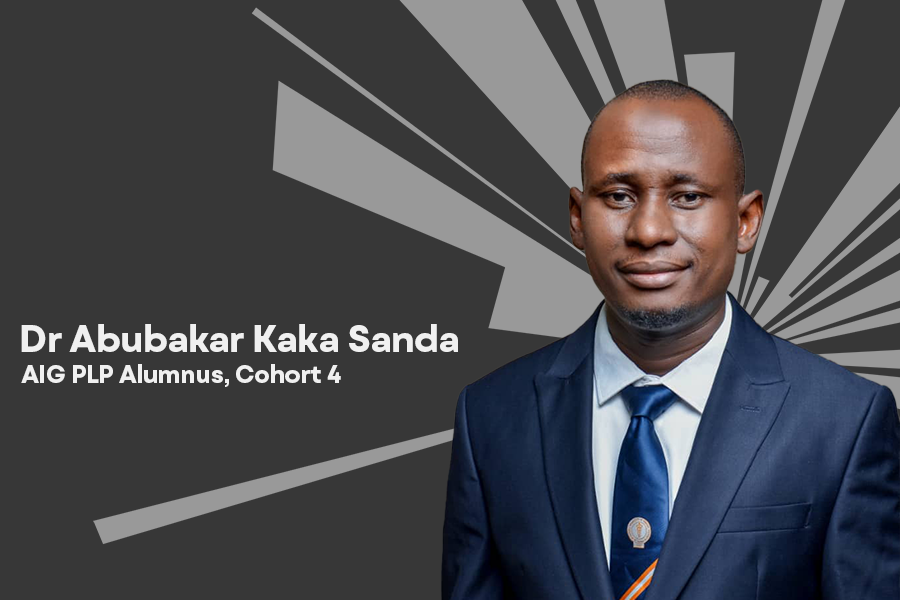
“The AIG Public Leaders Programme gave me a unique opportunity to refine my leadership capabilities, strengthen my understanding of public sector reform, and engage with a network of forward-thinking peers committed to nation-building”- Dr Abubakar Kaka Sanda, Senior Resident Doctor at University of Maiduguri Teaching Hospital, Maiduguri, Borno State.
Shaped by childhood experiences that exposed him to the power of public service, Dr Abubakar Kaka Sanda, Senior Resident Doctor at the University of Maiduguri Teaching Hospital, Maiduguri, drew inspiration from watching his parents dedicate their lives to serving their community. That early influence sparked a lasting commitment to contribute meaningfully to national development.
For him, the AIG Public Leaders Programme presented the right platform to formalise this passion and deepen his capabilities as a public sector leader. Since graduating as a member of the fourth cohort of the programme, he has continued to translate its lessons into tangible growth in his work and leadership journey.
“Although I have not experienced a formal career advancement yet, the knowledge and skills gained from the programme have been deeply impactful in strengthening my personal and professional growth,” he affirms
His reform project, “Addressing the Difficulties Encountered by Patients During Payment for Services at Tertiary Health Facility” tackles one of the most pressing operational challenges at the University of Maiduguri Teaching Hospital, long patient waiting times, a challenge faced in many healthcare centres in Nigeria.
The UMTH is a major referral centre, serving residents of Borno State, neighbouring states, and even countries like Niger, Chad, and Cameroon. Before his intervention, patients at the teaching hospital routinely faced long delays before receiving medical care. This was caused by the hospital’s use of a single central payment office, where all these patients had to pay first before accessing care. Queues were often overwhelming, and waiting times frequently exceeded 30 minutes. This not only caused frustration but also slowed down the commencement of treatment, even in emergency situations. Because of this, patients consistently expressed dissatisfaction with the payment process, which hindered service delivery and compromised their overall experience.
In response to this challenge, Dr Sanda introduced a decentralised payment system. Working with the Finance and IT Departments, he established multiple departmental payment points, making it easier for patients to pay quickly and proceed to treatment without unnecessary delays.
The AIG Public Leaders Programme was instrumental to this success. Its modules on storytelling, stakeholder engagement, and digital innovation equipped him with the tools to articulate the impact of this problem, secure leadership buy-in and design a patient-centred, technology-driven payment model.
“Management’s commitment has been secured using storytelling techniques acquired from the AIG Public Leaders Programme, which effectively illustrated the patient experience and operational challenges caused by the centralised payment system,” he confirms.
The first phase of the project had direct positive impact on the hospital. Multiple departmental pay points were established, resulting in reduced patient wait times and improved access to health services.
“Early feedback indicates that patients are experiencing shorter waiting times, faster access to care, and higher satisfaction with hospital services. The decentralised system has also improved staff workflow efficiency and reduced financial leakages,” he says.
The second phase of the project will introduce digital payment options, including barcode and online systems. Additionally, he intends to conduct internal training sessions to share lessons from the AIG PLP and strengthen staff understanding of the new payment workflow, ensuring sustainable institutional adoption.
This reform project demonstrates the impact of the AIG PLP in driving sustainable institutional change. Through his innovative approach, Dr Sanda has helped UMTH become a more efficient institution, reducing patient waiting times, and improving access to quality healthcare for citizens.