
Blessing Asia
Design & Communications Associate
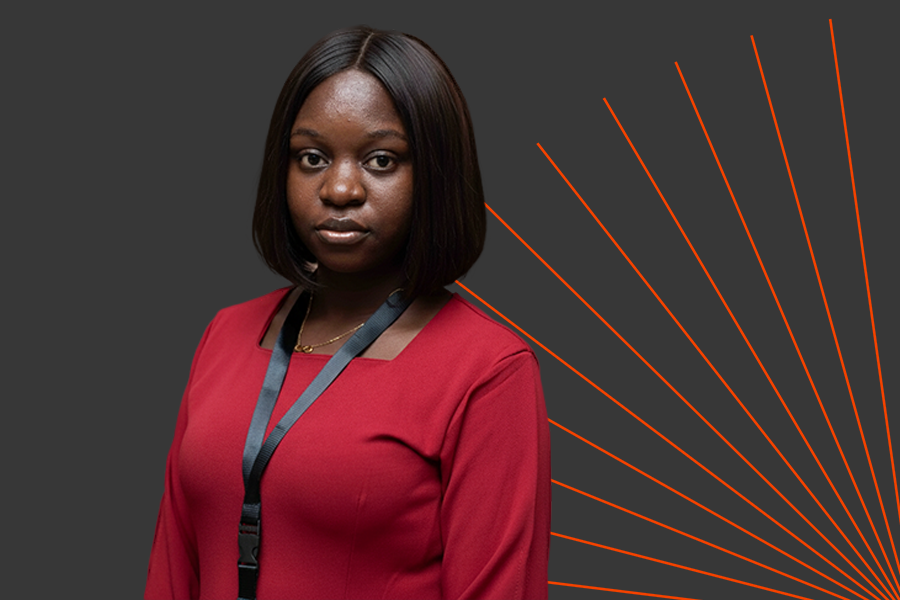
Meet our gap closer of the month, Blessing Asia, Design and Communications Associate at the Foundation. Blessing shares about her work and what makes it truly fulfilling.
“I started to realise that the public sector is not viewed the way it used to be, and that there is a gap that needs to be filled. So, being part of an organisation that is actively working to improve and strengthen that space feels very full circle for me,” she says.
Please share your educational and professional background.
I hold a Bachelor of Arts degree in Fine and Applied Arts from the University of Benin, where I majored in Graphic Design and Communications. I am also a Fellow of the Nbari Incubator Program and currently a mentor with the Geneza School of Design, where I support upcoming designers as they find their footing in the industry.
What inspired you to pursue a career in the development sector?
My dad is a Civil Servant, and one thing I grew up seeing was how much he genuinely loved what he did. I think that stayed with me. I always wanted to feel that same sense of purpose and pride in my work. Over time, I started to realise that the public sector is not viewed the way it used to be, and that there is a gap that needs to be filled. So, being part of an organisation that is actively working to improve and strengthen that space feels very full circle for me.
What do you do at the Foundation?
I work as a Graphic Design and Communications Associate at the Foundation. I support teams and stakeholders by creating visuals that help amplify the work we do and communicate it clearly to a wider audience. From digital to print, my role is really about helping tell our story in a way people can understand and connect with, because the work we do is important and deserves to be seen.
What does a typical day look like?
A typical day starts with checking my emails, joining stand-up meetings, and then working on different deliverables depending on the projects we are running. It could be internal engagement, stakeholder requests, print, social media. It really depends on the day honestly.
What makes the work that we do at I the Foundation unique?
I would say it is the level of intentionality. Capacity building is not small work it takes time, structure, funding, and a lot of consistency. And I think the Foundation is very deliberate about that, which makes the work stand out.
What is one project or moment at the Foundation that you are especially proud of, and why?There have been a lot, but the just concluded Closing Ceremony really stands out for me. The Communications team put in a lot of work late nights and a lot of back and forth to make sure we told the story of each cohort properly.
For me, working on the visual branding for the printed banners was a full circle moment. I also created digital ads that helped build momentum for the event, while collaborating with the team to make sure everything was aligned. Seeing my designs come alive not just visually but physically, and watching people react to them, was really beautiful. Seeing participants get excited, take pictures, and spot themselves on the printed banners was such a special moment. Seeing them online talking about how the AIG PLP impacted them made all the work feel worth it.
I also had the opportunity to interview some of the participants, and that added another layer to the experience for me. Hearing them talk about their journeys and the impact of the programme firsthand was really insightful. One thing that stayed with me was how they spoke about driving impact from where they are (leading from the middle), They are not waiting to become “seniors” before making change. Those moments really stuck with me.
How has your work at the Foundation shaped your perspective on public sector reform in Nigeria?
Before the Foundation, I did not fully understand the public sector. But now, I can say there are people who genuinely care about what they do and want to make impact. Hearing the reform projects and ideas from participants made me realise that public servants are not the lazy or unserious people we were made to believe they are. They are real people with ideas, dreams, and the willingness to do better.
What do you find most rewarding about your work?
For me, it is being able to communicate what we do in a clear and meaningful way. Whether it is through design, print, or storytelling, knowing that what I am putting out helps people understand the impact we are making especially in how we’re working to close the gap between Africa and the rest of the world.