
Good ideas alone do not deliver reform. So, what does it take to turn these ideas into meaningful results?
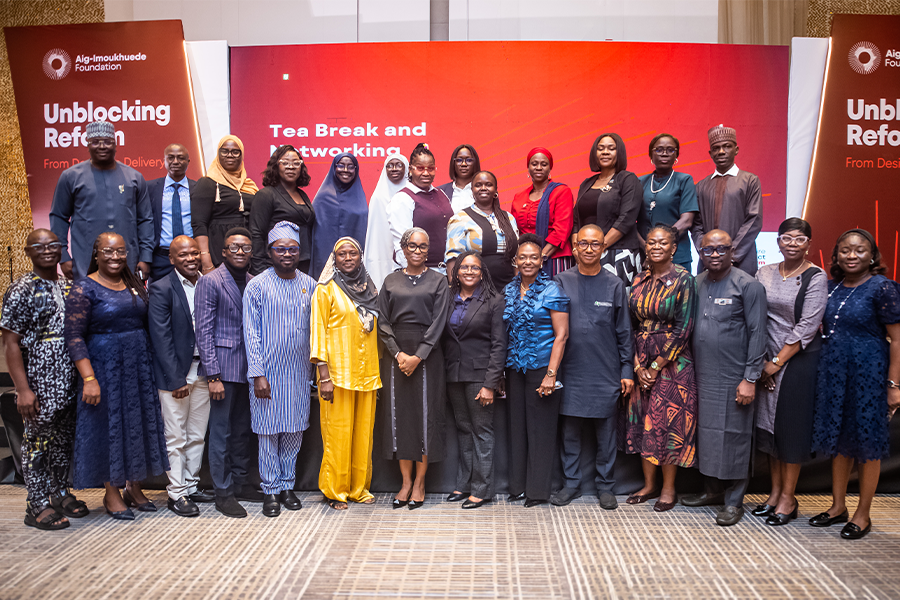
Our Public Sector Reform Convening brought together public sector leaders, public servants, development partners, private-sector stakeholders and members of our alumni community to examine the challenges of moving reforms from design to implementation. The conversations focused on building buy-in and coalitions for change, taking ownership of reform, learning from implementation experiences, and developing practical solutions to overcome barriers and sustain progress.
At the convening, “Unblocking Reform: From Design to Delivery,” we heard expert perspectives on the realities of successful reform implementation. Mr Bode Agoro, Head of Service, Lagos State, delivered the keynote address, reflecting on the demands and responsibilities of public service. He described public service as a calling and highlighted the value of platforms where public servants can exchange ideas, address implementation challenges and strengthen their ability to deliver results. He also emphasised the role of public servants in driving meaningful change by challenging the status quo, taking ownership of reform and championing better ways of working within their institutions. Watch his keynote address here.
The in-conversation session, “Behind the Reform: Lessons from the Frontlines of Change,” featured distinguished members of our Leadership Council, Dr Omobola Johnson and Dr Dere Awosika, MFR, mni, in a discussion moderated by our Executive Vice-Chair, Mrs Ofovwe Aig-Imoukhuede. Drawing on their experiences of leading and navigating reform in Nigeria’s public sector, they discussed the realities of implementation beyond policy design, including the challenges reformers must navigate to create change.
The panel discussion, “Advancing Reform: Building Buy-In and Coalitions”, examined how reformers can build the support and partnerships needed to make change happen. Drawing on experiences across health, public administration and education, the discussion highlighted how reformers can align priorities, bring stakeholders along and sustain momentum beyond the launch of the reform initiative.
The conversation, moderated by our Deputy-Director of Communications, Chioma Bright-Uhara, was joined by Dr Sola Pitan, Permanent Secretary, Lagos State Health District 1; Dr Funke Adepoju, Director-General, Administrative Staff College of Nigeria (ASCON); Dr Adeyanju Oyetoyan, Director of Medical Services and Disease Control, Lagos State Health District 1; Ayodele Ajayi, Director, Technical Special Committee on Rehabilitation of Public Schools (SCRPS), and our Director of Programmes, Chioma Njoku.
We concluded the convening with a Reform Solutions Lab, where members of our alumni community engaged with practical reform challenges and worked together to design solutions. Explore key insights and reflections from the convening in our Insights Booklet, available here.
Designing a reform is only the first step; lasting progress depends on the ability to build support, navigate institutional challenges and turn ideas into action.