
The Civil Servant Making Sure Lagos's Public Schools Can't Be Quietly Taken Away
Ayodele Ajayi is closing a decades-old paperwork gap that left hundreds of Lagos schools without legal title to their own land and building a system to make sure it never happens again.
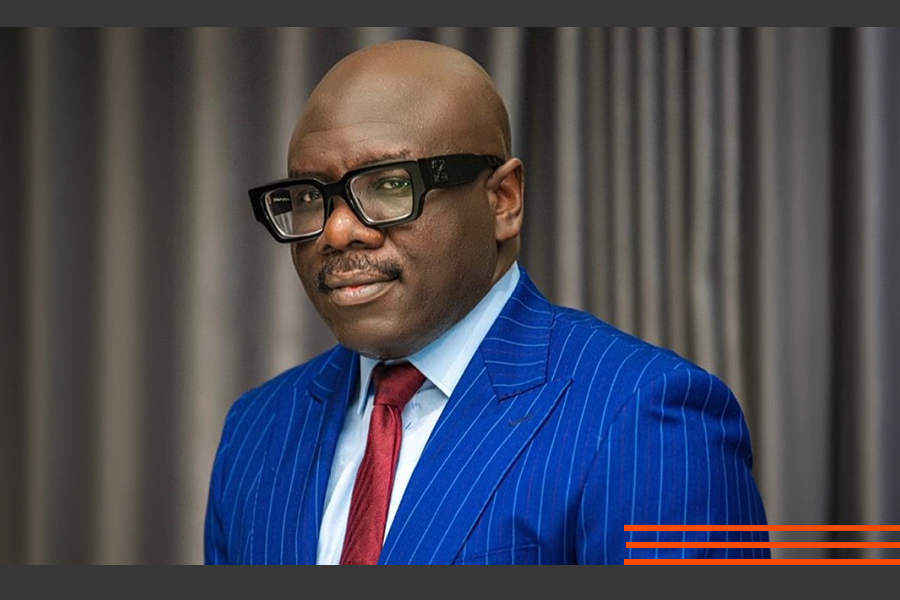
Meet Ayodele Ajayi, Director of Technical at Lagos State's Special Committee on Rehabilitation of Public Schools, and a Cohort 3 alumnus of the Aig-Imoukhuede Public Leaders Programme.
His work takes him into the everyday machinery of public education: repairs, renovations, and the physical upkeep of schools that serve hundreds of thousands of children. But somewhere along the way, Ajayi kept running into a problem that had nothing to do with broken roofs or peeling paint, and everything to do with paperwork that was never filed.
Across Lagos State, public schools, some decades old, serving thousands of students, were sitting on land the state had never formally secured. No survey plans, Certificates of Occupancy or documentation establishing ownership. The schools were real, the classrooms were full, but on paper, the ground beneath them belonged to no one in particular.
"It wasn't negligence in the obvious sense," is how Ajayi has described the gap. It is the kind of institutional blind spot that opens when everyone assumes someone else already handled it, and no one ever goes back to check.
The cost of that assumption was already showing up. Private individuals had begun occupying portions of school land. Boundaries were disputed. In some cases, school property had been quietly absorbed into neighbouring development, and the state had no documentation to challenge it. Without a title, ownership is just an argument and in a dispute over land, that difference decides who keeps the ground and who loses it.
Ayodele set out to turn uncertainty into facts. That meant building something that did not previously exist: a joint technical committee between his agency and the Lands Bureau. On paper, the two institutions had never needed to work together on this issue. In practice, neither could solve it alone.
The idea was shaped by lessons from Negotiating in the Public Interest, a course delivered by the faculty of the Blavatnik School of Government during his Aig-Imoukhuede Public Leaders Programme, helping him reframe the challenge not as a jurisdictional gap, but as a shared responsibility requiring structured collaboration. What followed was the move from informal engagement to a working mechanism with defined roles and accountability.
Together, they identified the schools most exposed to encroachment and sent GPS and drone survey teams to map their boundaries with precision. Survey plans went to the Lands Bureau for title processing, and because a project like this needed protection at the highest level, Ajayi pushed it all the way to the State Executive Council, securing the policy approval that finally established, in clear legal terms, that this land belongs to the state. The Office of the Surveyor-General has now completed and submitted precise survey plans for 200 public schools, currently moving through processing for Certificates of Occupancy.
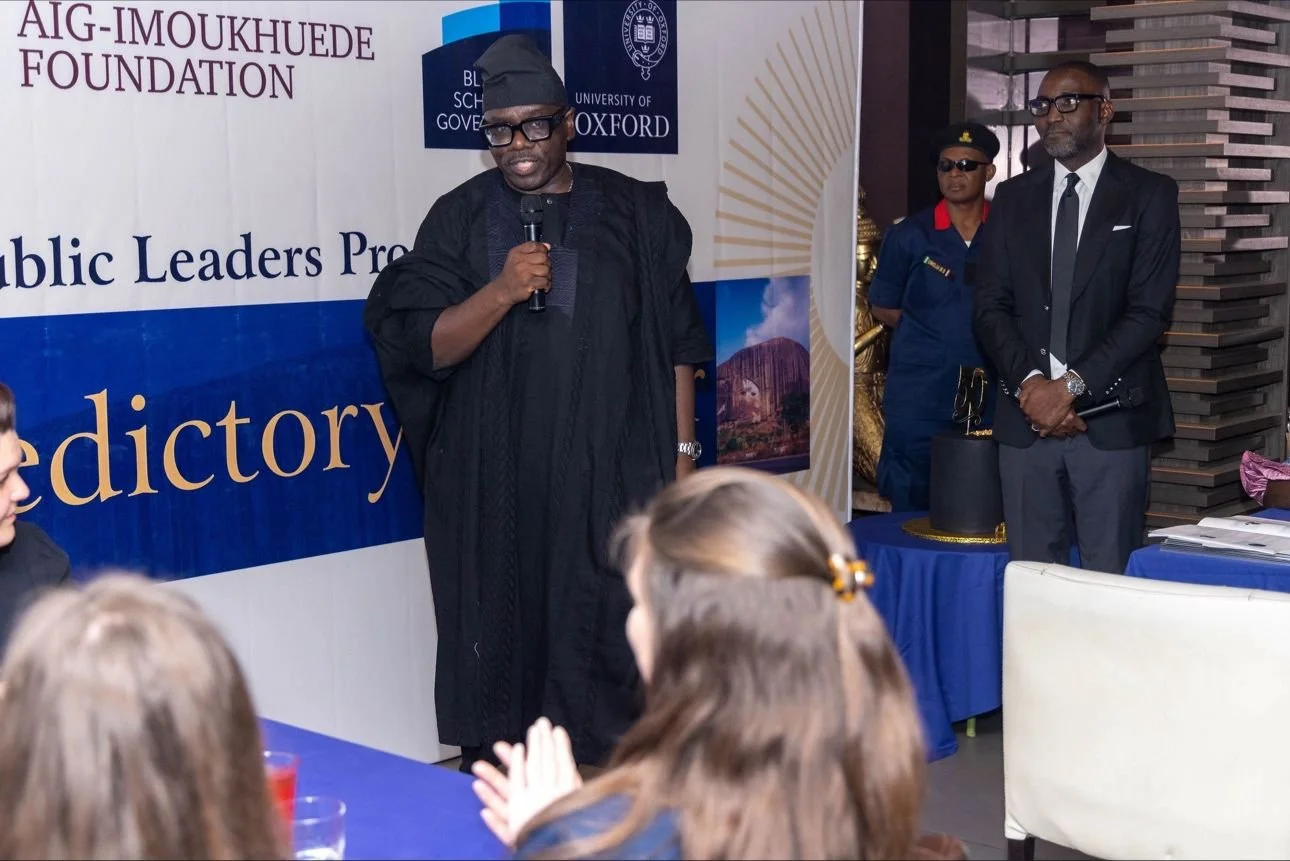
It's the kind of institutional malfunction that's easy to miss, because nothing looks wrong from the outside. Children show up, teachers arrive, and the gate opens every morning like clockwork. Nobody notices that the ground underneath is legally undefended until the day a boundary is challenged, or a slice of the schoolyard quietly disappears into someone else's development, and there's no paperwork to fight back with. By then, the cost of the original oversight is always far greater than the cost of having done it right the first time.
What Ajayi's work does is close that window of exposure for 200 schools and build a model for closing it everywhere else. Next, his team is pushing to expedite the outstanding Certificates of Occupancy, extending the survey work to schools not yet covered, and adapting the same approach to other state-owned assets beyond education. The aim isn't just to fix what was missed. It's to make sure nothing gets missed again.
Schools are where a country's future is formed. At the very least, they deserve legal certainty that the ground they stand on can't be taken out from under them.