
When the Numbers Don't Lie: Three Civil Servants Who Chose Honesty

Nnennaya Kalu-Umeh had a suspicion, the kind that nags at you quietly before it becomes impossible to ignore. Now Director of the Informal Sector at the National Health Insurance Authority, she was then serving as a Deputy Director when she watched training programme after training programme roll out across the institution. People attended, certificates were issued, and the files were closed, but something was off. When she sat down and looked at the outcomes, the picture was worse than she'd imagined. There were no clear standards, no real feedback, and results that swung wildly from one session to the next. The training programmes were happening; whether they were working was a different question entirely, and nobody had been asking it.
She asked it.
What followed wasn't dramatic. There was no public reckoning, no sweeping overhaul. Nnennaya redesigned the pilot training process using systematic participant feedback, developed a standardised training guide, and introduced an approach that began to be used within the organisation. When the next round came around, participants' knowledge had jumped by 74 per cent. Satisfaction scores had nearly doubled. Nine in ten participants left saying they were very satisfied. The difference between the old approach and the new one wasn't resources or mandate. It was the willingness to find out what had gone wrong before.

A few hundred kilometres away, at the Nigeria Electricity Regulatory Commission in Abuja, Hafsat Abdullahi Mustafa was dealing with a different kind of silence. As Deputy General Manager, she could feel the low hum of frustration that ran through the organisation. Staff had been filling in appraisal forms for years, going through the motions of a process that felt arbitrary and disconnected from anything real. Nobody thought the scores reflected actual performance, and nobody expected meaningful feedback. Over time, that quiet cynicism had become part of the furniture.
Hafsat, a Cohort 4 alumna of the Aig-Imoukhuede Foundation Public Leaders Programme, decided to name the problem out loud. She sat with staff, listened to what the process actually felt like from the inside, and studied what high-performing institutions did differently. Working closely with the HR team, she helped develop a Staff Performance Appraisal Handbook that became the foundation for a broader overhaul of the Commission's performance management process. Together, they introduced shared language, transparent criteria, and a stronger basis for honest conversations between managers and their teams. It was, in many ways, an act of institutional courage: acknowledging that the existing system was no longer working and choosing to build something better.
The early signs are promising. Motivation is improving, and staff are beginning to connect their daily work to something larger than themselves. The reforms have also become part of the Commission's everyday rhythm, with quarterly reviews and lessons-learned sessions creating regular opportunities for feedback, reflection, and continuous improvement. What was once a box-ticking exercise is steadily becoming a process that people engage with—and even take pride in.
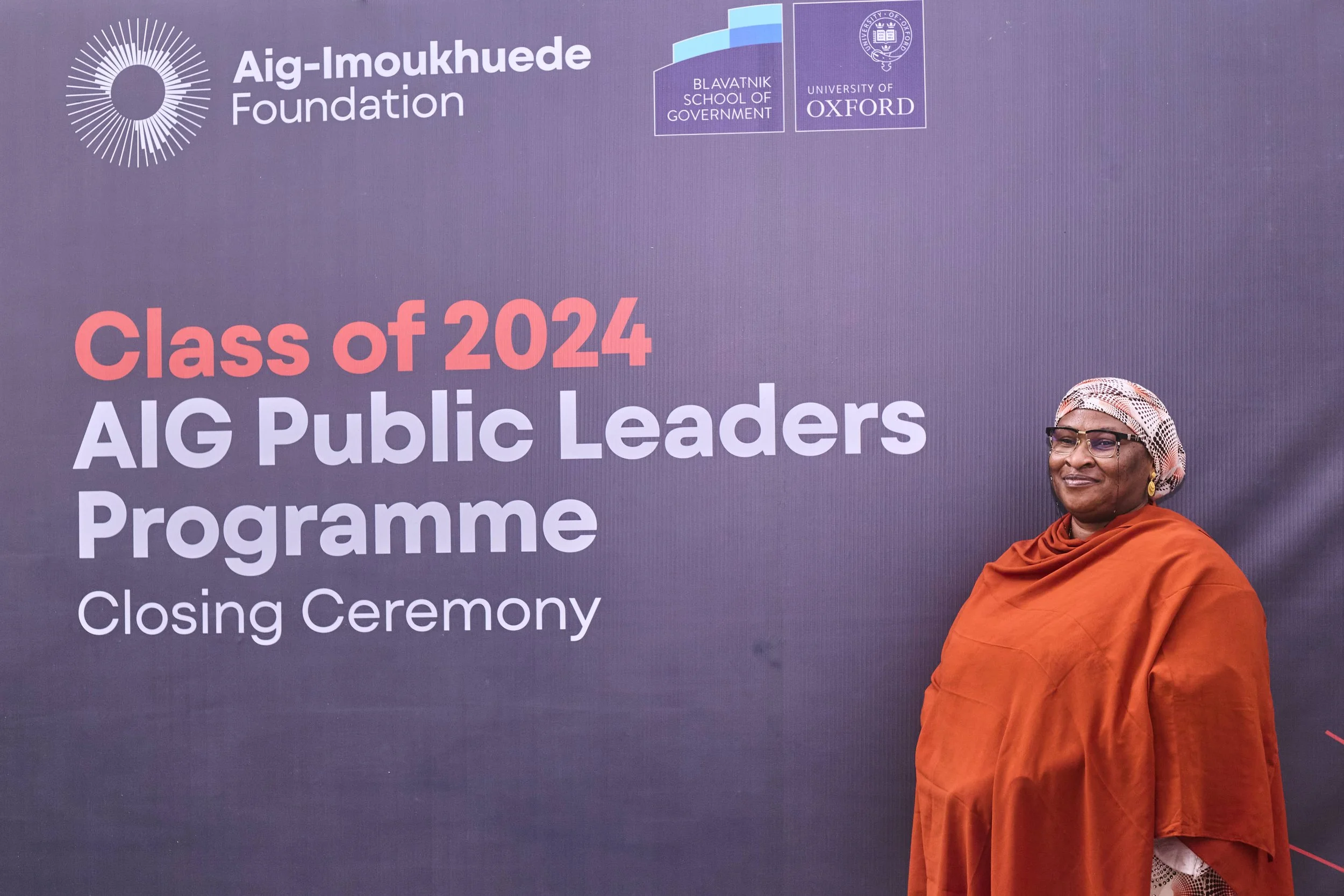
Then there is Dr Iriagbonse Osaigbovo, and the story she uncovered at the University of Benin Teaching Hospital.
She started with a simple survey. She wanted to know how many of the hospital's clinical Heads of Department were familiar with the institution's Strategic Development Plan, the document that was supposed to anchor everything the hospital was trying to become. The results were striking: about three-quarters of them had heard of the plan, fewer than half had actually read it, and only 23% of Heads of Department had departmental copies of the Strategic Development Plan.
The plan had a priority called "organisational learning", and proposed action plans to make it happen, but these weren't being implemented.
Dr Osaigbovo, also a Cohort 4 alumna of the AIG Public Leaders Programme, introduced what are called After Action Reviews, (AARs) which is a structured reflection after significant activities, events, or responses (such as the Antimicrobial Resistance Awareness Week activities and the diphtheria outbreak response). It is also a structured way of sitting together after a significant plan has been introduced to ask honestly, what worked, what didn't, and what should change. The model comes from healthcare systems that have learned, sometimes painfully, that reflection after the fact is not a luxury. It is how institutions avoid repeating the same mistakes.
She ran two pilot reviews. More than four in five participants said they would bring the practice into their own teams. The Antimicrobial Stewardship Committee, for its part, implemented recommendations from the AARs. it changed how it engaged its sponsors on the spot, acting on what the first review had surfaced.

What connects these three women is not that they had more power than their colleagues, or more resources, or more time. What connects them is a particular kind of honesty, the willingness to look at what is actually happening rather than what is supposed to be happening, and to treat that gap not as an embarrassment but as information.
That distinction matters more than it might seem. The continent's reform landscape is littered with initiatives that were measured by the wrong things, the workshops held, the manuals printed, the meetings attended, rather than by the change that actually occurred. When a push for digitalisation across several government agencies concluded that 100 per cent of planned sensitisation workshops had been completed, the evaluation said nothing about the fact that fewer than one in five civil servants had actually adopted the new tools. The project moved into a maintenance phase. It maintained, effectively, systems that almost nobody was using.
This is a story about what happens when the systems around people reward the appearance of progress over its substance. When the path of least resistance is to celebrate process and file the results away, most people, rational, well-meaning people, will take it.
The harder path is the one Nnennaya, Hafsat, and Iriagbonse chose. Not the path of blame or confession, but the path of genuine inquiry: what is actually happening here, and what does it tell us?
The World Bank has spent decades studying what separates public institutions that improve from those that don't. The answer, consistently, is not the absence of setbacks; every institution has them. It is the capacity to learn from them, to treat failure not as something to manage quietly, but as the beginning of a better question.
That capacity can be built. These three women are building it, one institution at a time.
Authors: Godwin Ochube, Vera David