
The greatest impact philanthropy can have is not only responding to today's challenges but improving the systems that can sustain consistent response to those challenges when they arise.
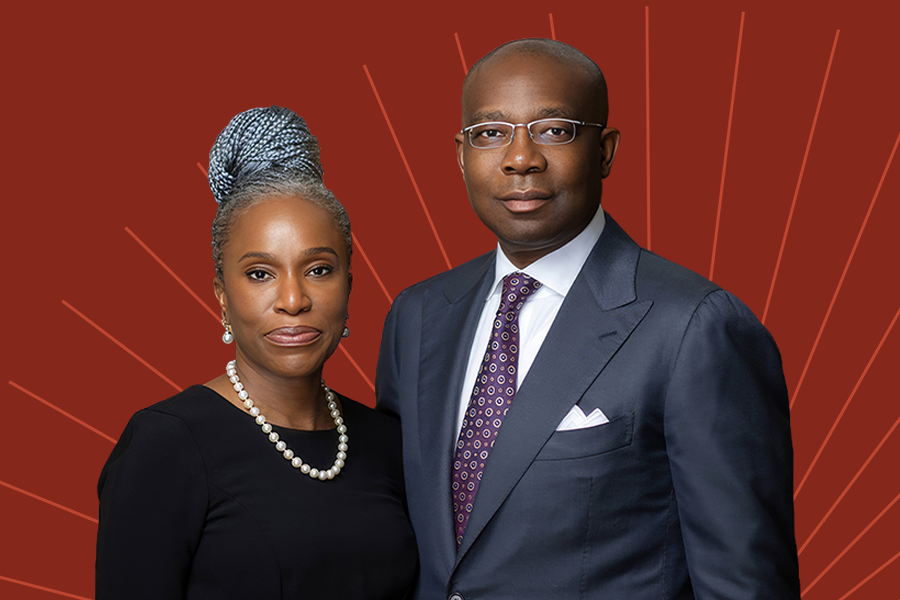
In a new op-ed, our Chairman and Executive Vice-chair, Aigboje and Ofovwe Aig-Imoukhuede argue that Africa's most durable progress will come from investing in people and the institutions that enable them to thrive.
In an op-ed titled "A Theory of Change for Africa: Why We Build Systems, Not Monuments," our Chairman and Executive Vice Chair make the case that sustainable change in Africa will not come from one-off solutions to the challenges on the continent, but from investing in the people who can repair the systems that produce those challenges.
“Our theory of change is deceptively simple, and it begins with people. If we equip public servants to become effective leaders with the technical competence to transform their institutions, and if we support them throughout their careers with an ecosystem of reform allies, rigorous evidence, and resources at the scale required to overcome the barriers to change, then those leaders can drive systemic improvements that reduce dependency and expand opportunity at scale”.
Drawing on the vision behind the Foundation’s work, and on their roles as Co-Chairs of the King's Trust International Africa Advisory Board, they emphasised that strong institutions and empowered young people are two halves of the same promise, and that philanthropy is only as powerful as the time, expertise, influence, and conviction behind it.
“A reformed Civil Service and an empowered school-leaver may appear to occupy different worlds, but they are, in truth, two halves of a single promise. We refuse to pursue one without the other.”
This conviction, that legacy is not a monument, but the people and institutions that outlast them, continues to shape their work.
Read the full op-ed to see how this conviction guides their approach to leadership development and youth empowerment across Africa.