
Artificial Intellligence is reshaping financial services, but is it being built for everyone? AI is transforming financial services, yet it is often trained on data that fails to reflect women's financial realities. What will it take to ensure these systems expand opportunity rather than deepen existing inequalities?
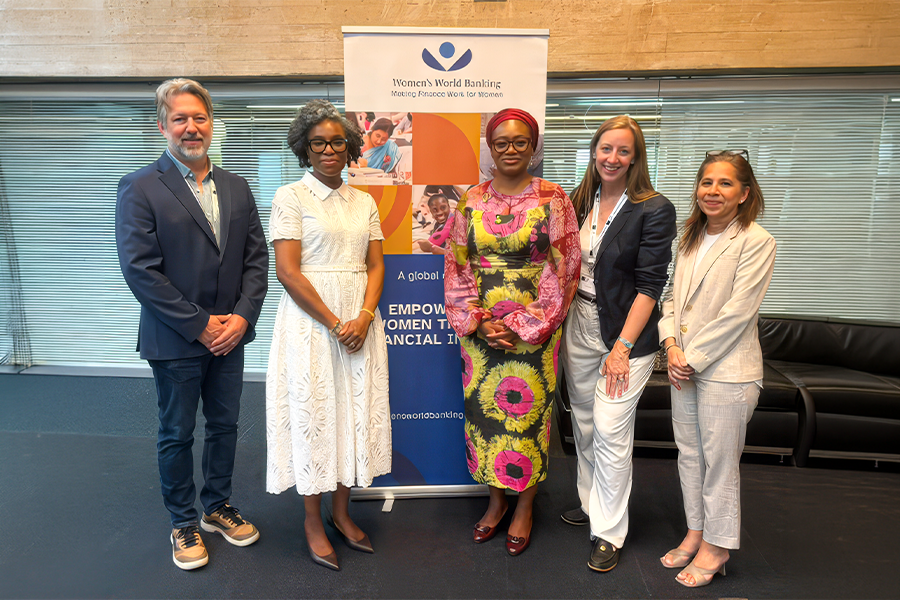
Our Executive Vice Chair, Mrs Ofovwe Aig-Imoukhuede, joined global development partners and private sector leaders at a roundtable session on how financial institutions can build and govern AI more responsibly.
Co-hosted by Women's World Banking, a global non-profit organisation that works to expand women's financial inclusion and economic empowerment and Infosys, a global technology services and consulting company, the roundtable session convened development partners, financial inclusion practitioners, and private sector leaders to explore how AI can be designed to advance financial inclusion for women.
The key takeaway from the discussion was that inclusive AI is not simply about better technology. It begins with ensuring that the design of AI systems, the data collected and the people shaping those systems reflect the realities of the women they are intended to serve.
The discussion highlighted that exclusion could begin long before an algorithm makes a decision. It can be embedded in the data that is collected, the behaviours recognised as evidence of creditworthiness, the assumptions that shape financial products and the people involved in developing AI systems. Without deliberate efforts to address these issues, AI risks reinforcing existing inequalities rather than expanding opportunity.
Reflecting on the discussion, our Executive Vice Chair noted that if AI is to expand access rather than reinforce existing inequalities, financial institutions must govern these systems with greater intention, accountability and clear understanding of the people they are to serve.
The event was attended by the Foreign, Commonwealth & Development Office (FCDO), the Gates Foundation, Shell Foundation, Vodafone Foundation, and other private sector entities working on financial inclusion.