
How Structured Stakeholder Engagement Contributed to the Establishment of the World’s First UNESCO Category 2 Institute on Media and Information Literacy
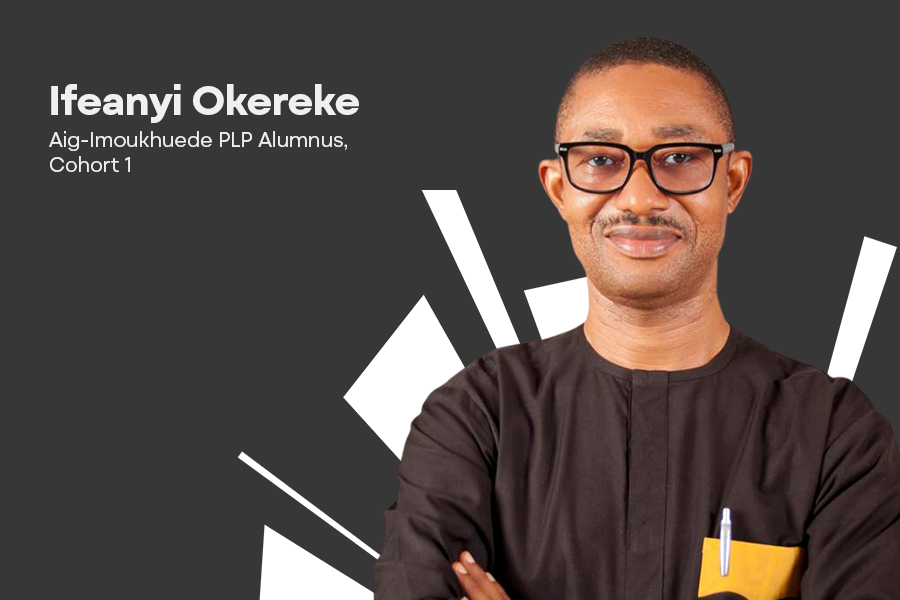
Ifeanyi Okereke, Deputy Director Overseeing ICT Department, Federal Ministry of Information and National Orientation.
Successful institutions are not built by one person. They take stakeholders willing to come together, work through setbacks, and stay committed to a shared goal.
This was the lesson Ifeanyi Okereke applied in contributing to Nigeria’s launch of the world's first UNESCO Category 2 Institute dedicated to Media and Information Literacy.
When Ifeanyi Okereke joined the inaugural cohort of the Aig-Imoukhuede Public Leaders Programme (PLP), his reform project, “Stakeholder Consultations: An Effective Tool for Public Policy Implementation – A Case Study of the Preparation for the UNESCO General Conference 2023,” focused on how meaningful stakeholder engagement can improve policy implementation and create broader ownership of public sector initiatives.
The project was particularly relevant to strengthening Nigeria’s leadership in Media and Information Literacy and advancing its efforts to establish a United Nations Educational, Scientific and Cultural Organization (UNESCO) International Media and Information Literacy (MIL) Institute, a Category 2 Institute.
For Nigeria, establishing the Institute faced challenges, primarily because the commitment came at the end of President Buhari’s administration, making the transition to a new government difficult without adequate funding. Meeting UNESCO’s Category 2 Centre requirements was also challenging, given the timelines for the proposal, feasibility study and approval process, among other factors.
Ifeanyi and other stakeholders worked to keep the initiative moving. With his Director, Dr Sunday Baba, colleagues, and Dr Oladele Aderemi, Adviser at Nigeria's Permanent Delegation to UNESCO, he pursued the Abuja Declaration, a policy commitment from the 2022 Abuja Global MIL Week, to finance and advance MIL activities, while continuing to seek UNESCO Executive Board approval and pursue the longer-term work needed to establish the Institute. Together with the Technical Committee on IMILI, and under the leadership of the Honourable Minister of Information and National Orientation, Alhaji Idris Mohammed, they organised workshops, seminars and virtual and international sessions on Media and Information Literacy, creating a framework for government, academia, civil society and international stakeholders to contribute to the initiative.
These efforts led to the establishment of the International Media and Information Literacy Institute at the National Open University of Nigeria (NOUN) in Abuja, its designation as a UNESCO Category 2 Institute in November 2025, and its successful launch in Abuja on 29 April 2026.
IMILI is the world’s first UNESCO Category 2 Institute dedicated to Media and Information Literacy, serving as a global hub for evidence-based policy advocacy. For Ifeanyi, the experience showed that reform is collective, but it can start with one person committed to seeing an idea through.
At the Aig-Imoukhuede Foundation, we believe that transformed public institutions are built by leaders who can build coalitions and stay committed to an outcome larger than themselves. Ifeanyi’s contribution to establishing C2 IMILI demonstrates that lasting institutional change often depends not on any single decisive act, but on the patient work of bringing the right stakeholders together and seeing that work through to success.