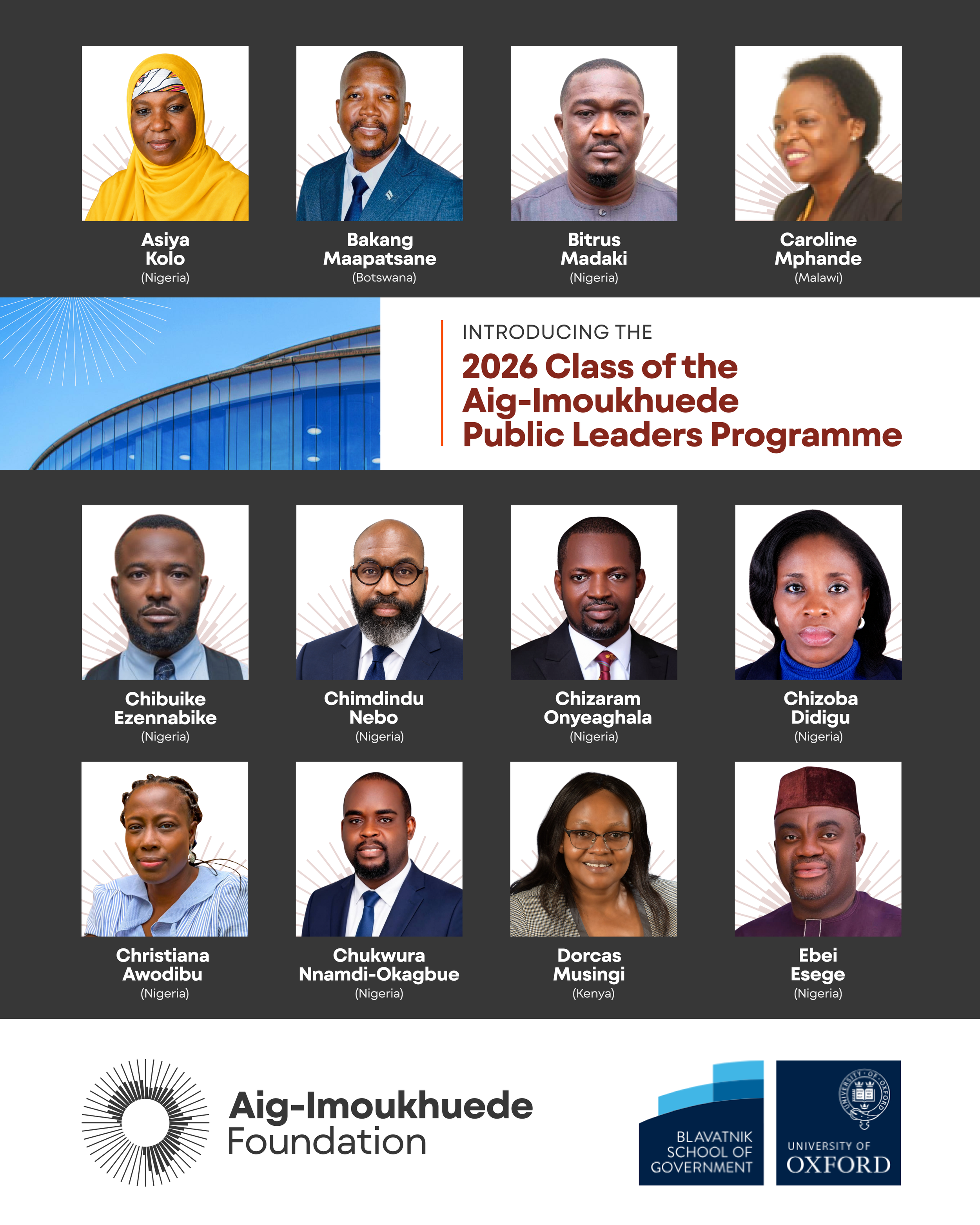
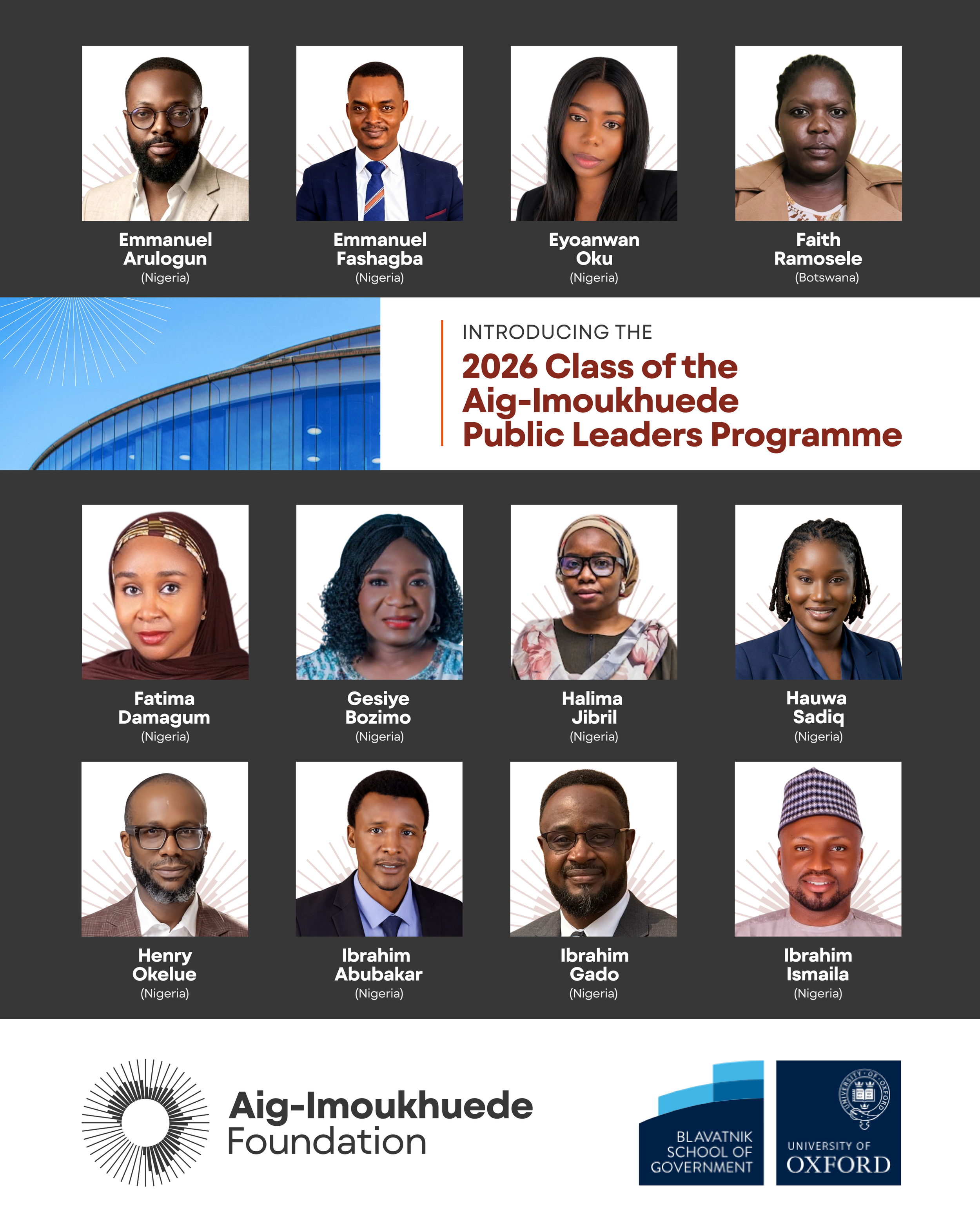
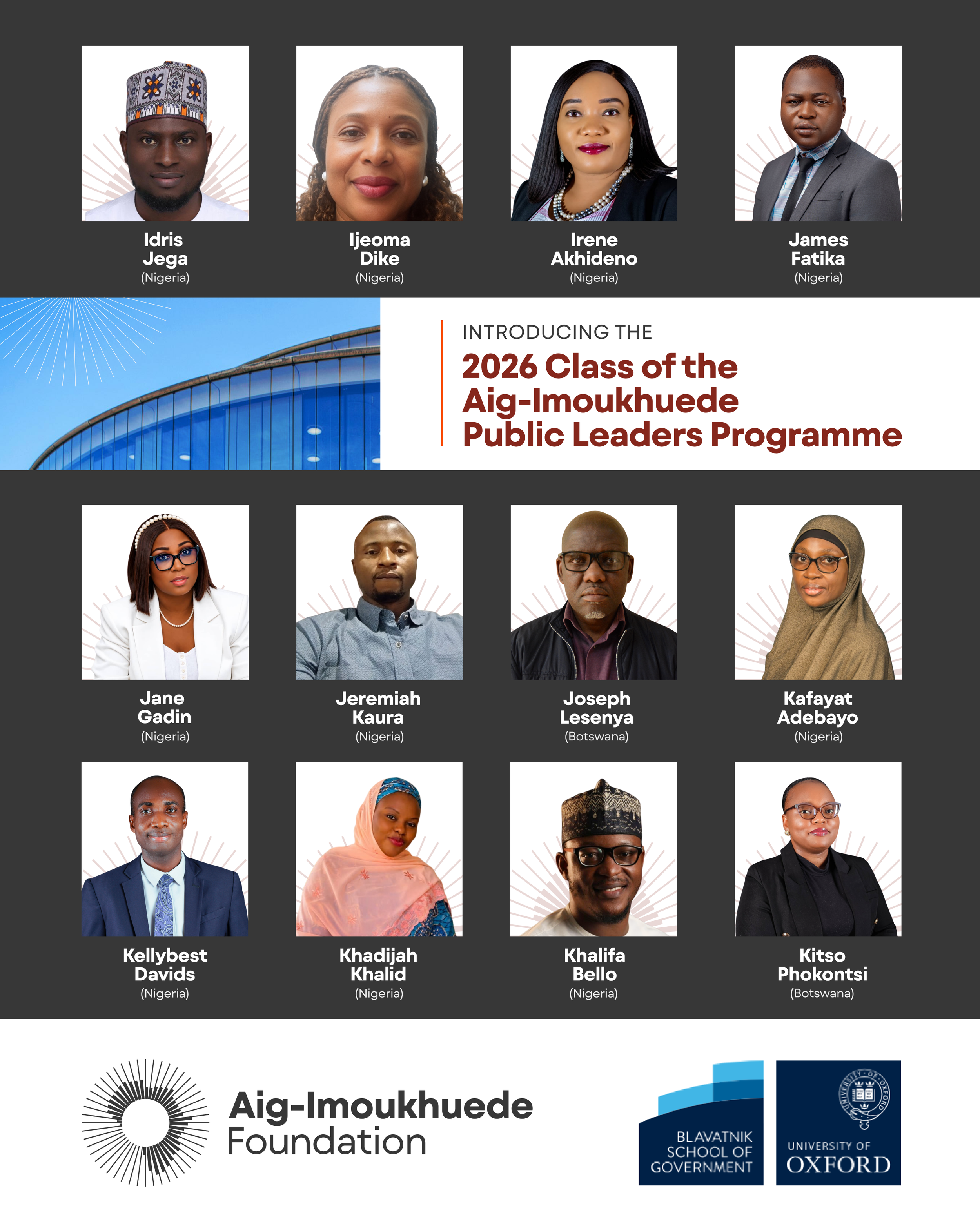
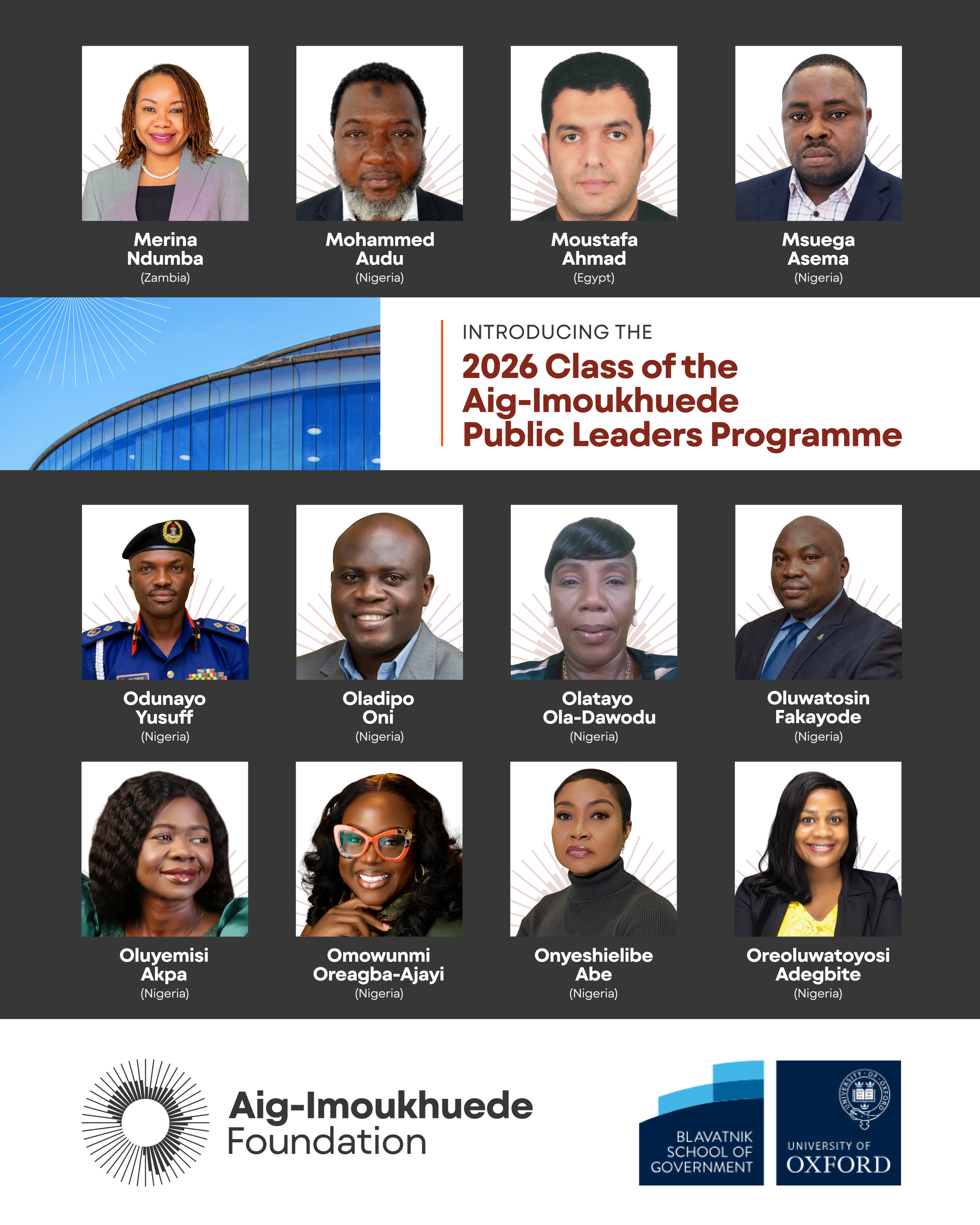
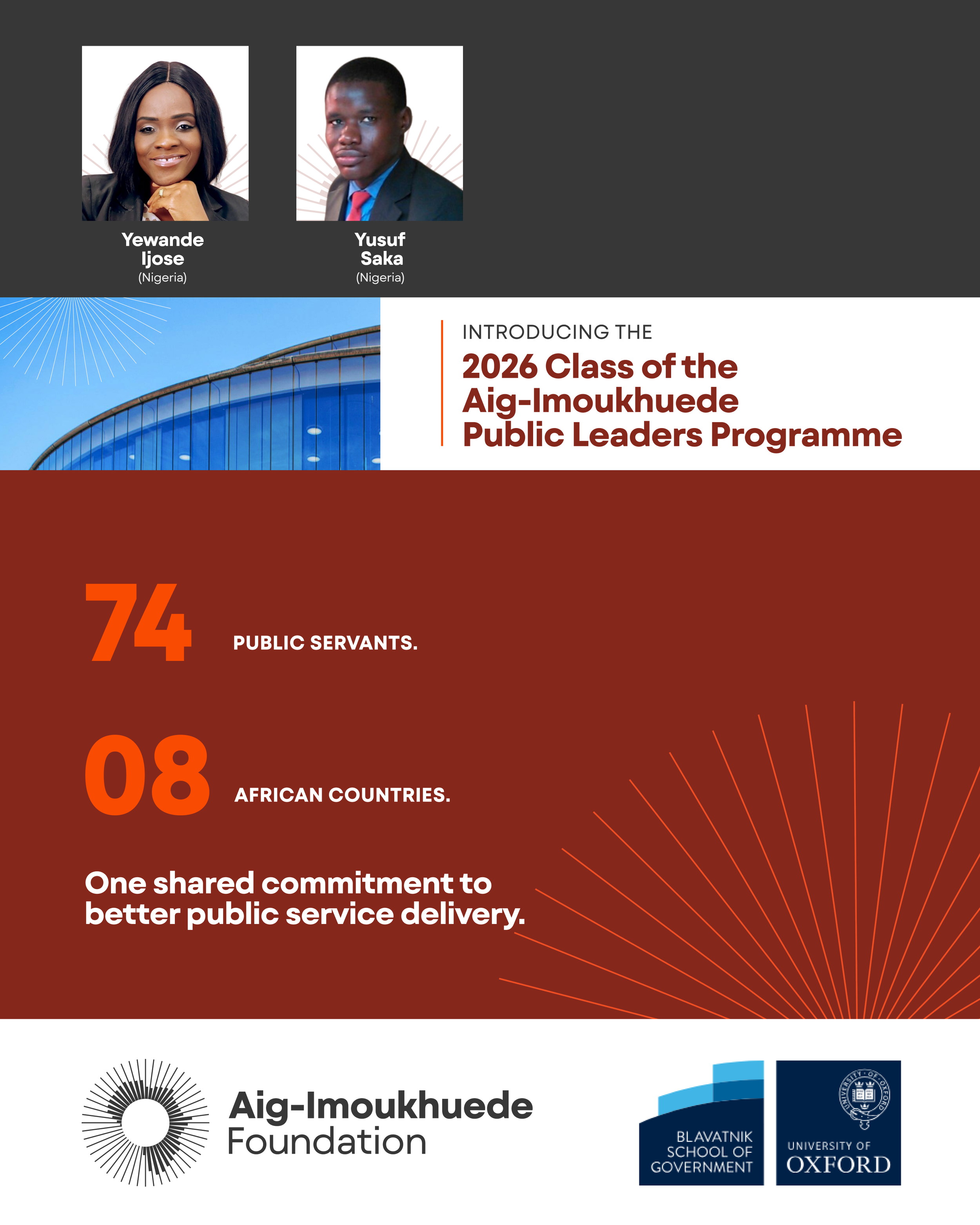
74 Public Servants. Eight Countries: The Aig-Imoukhuede Public Leaders Programme
We are proud to welcome 74 exceptional public servants from Botswana, Egypt, Eswatini, Ghana, Kenya, Malawi, Nigeria and Zambia into the sixth cohort of the Aig-Imoukhuede Public Leaders Programme, selected through a rigorous, multi-stage process for their leadership potential and commitment to public service.
Since its launch in 2021, the Programme has grown into a pan-African community of more than 300+ senior public officials who have returned to their institutions with sharper leadership capability and a clear mandate for reform. Together, they have designed and implemented over reform projects in ministries, departments and agencies across sectors as varied as healthcare, finance, agriculture and education.
Over the next six months, the new cohort will engage with a curriculum delivered by the University of Oxford’s Blavatnik School of Government's faculty through a blend of online and in-person learning. Drawing on faculty-led discussion, simulations and collaborative group work, they will explore themes such as negotiation, integrity in public life and harnessing technology, building the conceptual frameworks and practical tools needed to navigate complex systems and lead change in increasingly dynamic governance environments.
At the heart of the Programme is the reform project, through which each participant identifies a pressing service delivery challenge within their institution and designs a practical response to it. On completing the Programme, all 74 participants will join our alumni community, where they will continue to receive support, training and opportunities to deepen their impact.
We look forward to seeing how this cohort turns learning into lasting reform and helps build stronger public institutions across the continent.
Click here to see what the Aig-Imoukhuede PLP experience is like.